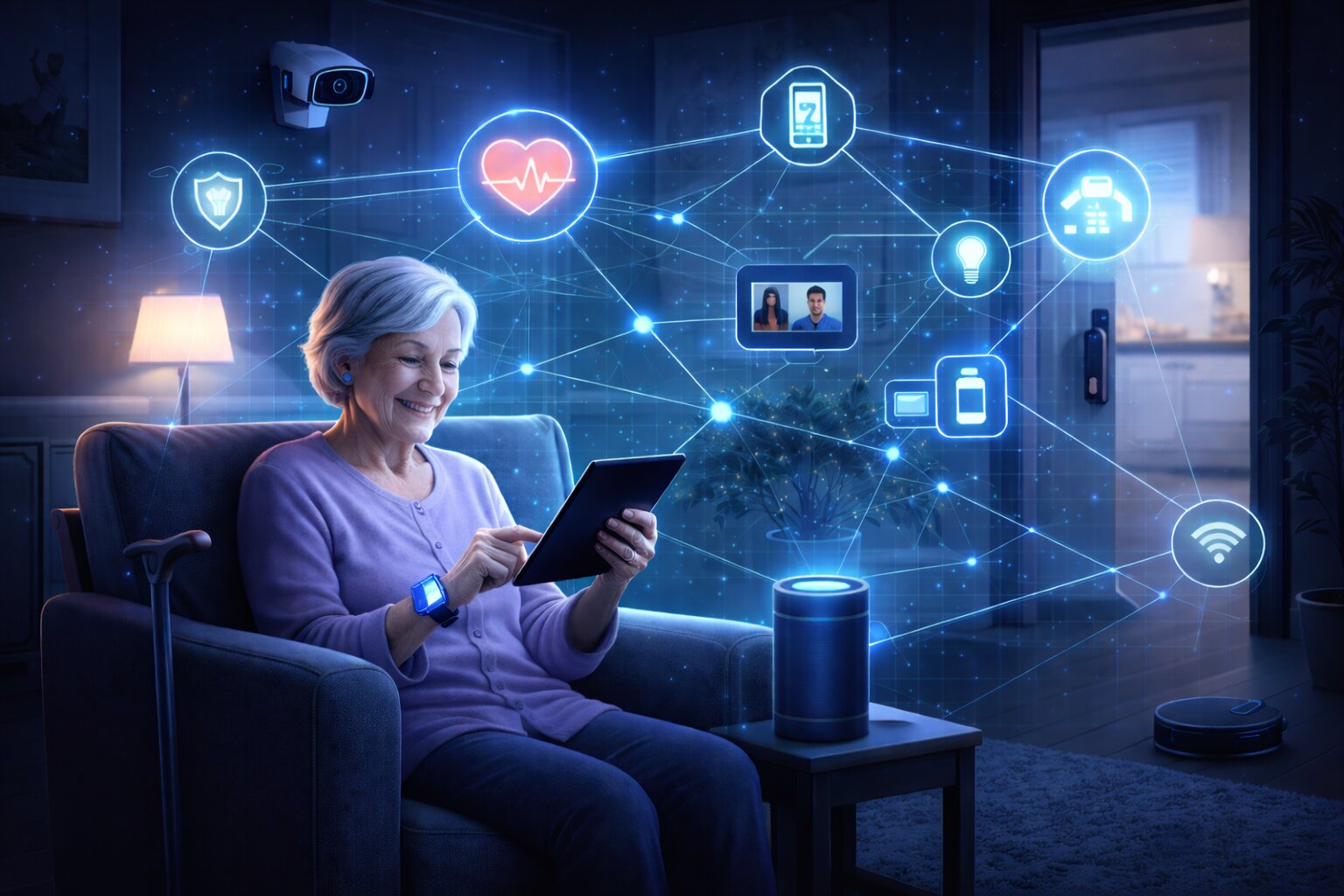
How Smart Home Devices Are Supporting Independent Living for Seniors
The rapid development of smart home technology is transforming how people live, particularly for older adults seeking to maintain independence. As populations age across many parts of the world, there is growing interest in solutions that allow seniors to live safely and comfortably in their own homes for longer.
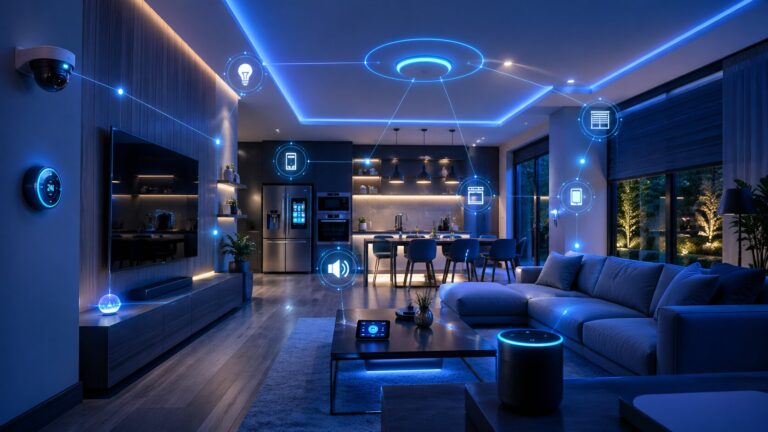
Smart home devices—ranging from voice assistants and connected sensors to health monitoring systems—are playing an increasingly important role in this shift. These technologies are not only enhancing convenience but also addressing key challenges related to safety, health, and daily living.
By integrating intelligent systems into everyday environments, smart homes are helping redefine what independent living looks like in a digital age.
The Shift Toward Ageing in Place
Ageing in place—the ability to live in one’s own home safely and independently—is a priority for many older adults. It offers familiarity, comfort, and a sense of autonomy that institutional care environments may not provide.
However, ageing in place can present challenges, particularly as mobility, memory, and health needs change over time. Smart home technology is increasingly seen as a way to bridge this gap, providing support without removing independence.
By embedding assistance into the environment itself, these technologies allow seniors to maintain control over their daily lives while benefiting from additional layers of safety and support.
Voice Assistants and Hands-Free Control
One of the most widely adopted smart home technologies is the voice assistant. Devices that respond to voice commands allow users to control various aspects of their home environment without the need for physical interaction.
For seniors, this can be particularly valuable. Tasks such as adjusting lighting, setting reminders, or making phone calls can be performed simply by speaking. This reduces reliance on complex interfaces or small touchscreens, which may be difficult to use.
Voice assistants can also provide information, such as weather updates or medication reminders, helping users stay organised and informed.
The simplicity of voice interaction makes it a key enabler of accessibility in smart home environments.
Smart Lighting and Environmental Control
Lighting plays an important role in both safety and comfort. Smart lighting systems can be programmed to adjust automatically based on time of day, activity, or user preferences.
For example, motion-activated lighting can illuminate pathways at night, reducing the risk of falls. Automated schedules can ensure that lights are turned on and off at appropriate times, supporting daily routines.
Environmental controls, such as smart thermostats, can also contribute to comfort and wellbeing. These systems can adjust temperature settings automatically, maintaining a consistent and comfortable environment.
By automating these aspects of the home, smart devices reduce the need for manual adjustments and enhance overall usability.
Health Monitoring and Remote Care
Health monitoring is one of the most significant areas where smart home technology is making an impact. Devices can track a range of health metrics, including heart rate, activity levels, and sleep patterns.
Some systems are designed to detect unusual patterns or changes in behaviour, which may indicate potential health issues. Alerts can be sent to caregivers or healthcare providers, enabling timely intervention.
Remote monitoring allows seniors to receive support without the need for constant in-person supervision. This can provide reassurance to both users and their families, while preserving independence.
The integration of health data into smart home systems represents a convergence of healthcare and everyday living environments.
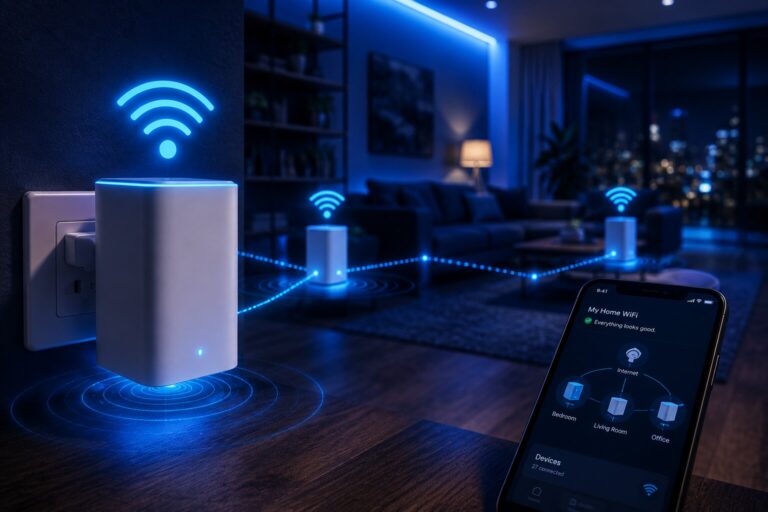
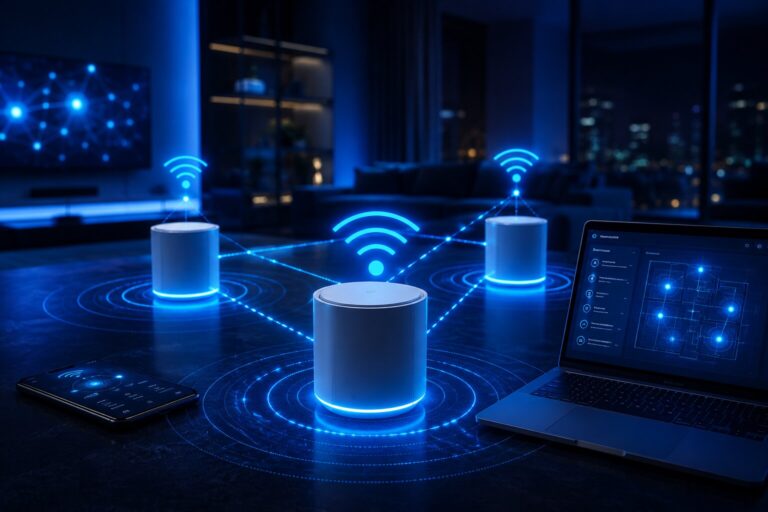
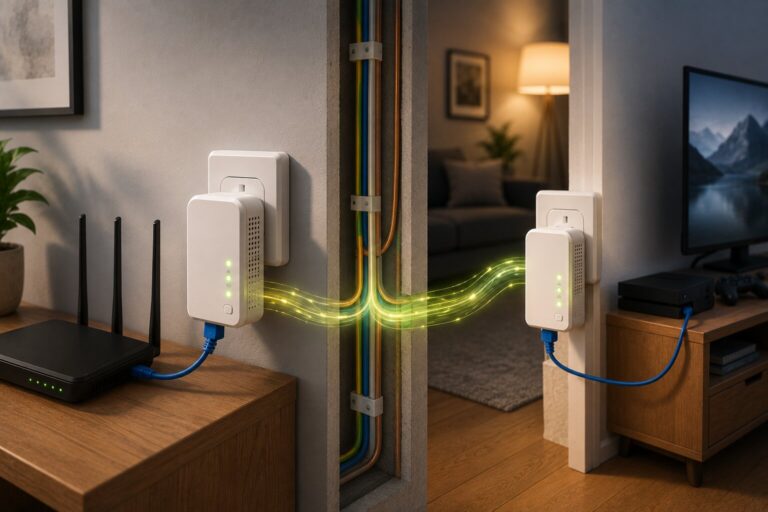
Like many elements listed here, there is a dependence upon having a reliable (and reasonably fast) internet connection. For those who don’t already have that, a good place to start is with our article on improving home Wifi. There are actually various options available, some of which can seem quite daunting at first. However, you will find that even building a home Wifi mesh system needn’t be beyond you, if you follow the simple tips available online.
Fall Detection and Emergency Response
Falls are a major concern for older adults, often leading to injury and reduced mobility. Smart home technologies are increasingly being designed to detect falls and respond quickly.
Wearable devices and in-home sensors can monitor movement and identify sudden changes that may indicate a fall. In such cases, alerts can be sent automatically to emergency contacts or services.
Some systems also include emergency buttons or voice-activated alerts, allowing users to request help quickly.
These features provide an additional layer of safety, helping to ensure that assistance is available when needed.
Security and Peace of Mind
Smart home security systems can enhance safety by monitoring access points and providing real-time alerts. Smart locks, cameras, and door sensors allow users to control and monitor their homes more effectively.
For seniors, this can provide a sense of security and reduce anxiety about potential intrusions. Remote access features also allow family members or caregivers to check in when necessary.
Video doorbells and communication systems enable users to see and speak with visitors without opening the door, adding another layer of protection.
These technologies contribute to a safer living environment while maintaining user control.
Simplifying Daily Tasks
Smart home devices can assist with a range of everyday tasks, making daily life more manageable.
Automated appliances, such as smart ovens or robotic vacuum cleaners, reduce the need for physical effort. Reminder systems can prompt users to take medication, attend appointments, or complete routine activities.
Integration between devices allows for coordinated actions. For example, a morning routine might involve lights turning on, the thermostat adjusting, and a voice assistant providing updates—all triggered automatically.
These features help streamline daily activities, reducing cognitive and physical demands.
Connectivity and Social Interaction
Maintaining social connections is important for overall wellbeing, particularly for older adults who may experience isolation.
Smart home technology can support communication through video calls, messaging, and social platforms. Voice-activated devices make it easier to initiate contact with family and friends.
Some systems also integrate with entertainment platforms, providing access to music, television, and other forms of engagement.
By facilitating communication and access to content, these technologies help support a more connected lifestyle.
Challenges in Adoption and Usability
Despite their benefits, smart home devices are not without challenges. One of the primary concerns is usability. Devices must be intuitive and easy to operate, particularly for users who may not be familiar with technology.
Complex setup processes or confusing interfaces can limit adoption. Ensuring that devices are designed with accessibility in mind is therefore essential.
Cost is another consideration. While prices are decreasing, some systems may still be out of reach for certain users.
There are also concerns related to privacy and data security, particularly when devices collect sensitive information.
The Role of Caregivers and Support Networks
Smart home technology often works best when integrated into a broader support network. Caregivers, family members, and healthcare providers can play a role in monitoring and assisting users.
Remote access features allow caregivers to receive updates and respond to alerts, providing support without being physically present.
This collaborative approach enables a balance between independence and assistance, where technology acts as a bridge between users and their support networks.
The Future of Smart Living for Seniors
As technology continues to evolve, smart home systems are likely to become more advanced and more integrated. Artificial intelligence may enable more personalised and predictive support, adapting to individual needs over time.
Future developments could include more seamless integration between devices, improved health monitoring capabilities, and enhanced user interfaces.
There is also potential for greater interoperability, allowing devices from different manufacturers to work together more effectively.
These advancements will further enhance the ability of smart homes to support independent living.
A New Model for Independent Living
Smart home devices are redefining what it means to live independently in later life. By embedding intelligence into everyday environments, these technologies provide support that is both subtle and effective.
Rather than replacing human care, they complement it, offering tools that enhance safety, comfort, and autonomy.
As adoption continues to grow, smart homes are likely to play an increasingly important role in supporting ageing populations, creating environments that are not only connected but also responsive to the needs of their users.
If you have personal experience in this area and would be interested in technology guest post opportunities, then we’d love to hear your pitch here at Dykes Do Digital.