AI Innovation in Engineering
AI innovation in engineering is not a single breakthrough. It is a broad shift in how engineers design, test, monitor, optimise and maintain the systems that shape the physical world. It affects products, infrastructure, energy networks, factories, vehicles, buildings, electronics and software-defined machines.
The most important change is not that artificial intelligence can now generate impressive outputs. The deeper change is that engineering workflows are becoming more adaptive. Instead of relying only on static models, fixed schedules and manual review, engineers can work with tools that learn from data, detect anomalies, explore alternatives and support decision-making across complex systems.
This does not make engineering less rigorous. It makes rigour more important. When AI is used in engineering, its recommendations must be checked against physics, safety standards, operating conditions, cost constraints and practical experience. A model can identify a pattern, but an engineer must decide whether that pattern matters. A system can optimise a design, but an engineer must decide whether the result can be manufactured, maintained and trusted.
The best way to understand AI innovation in engineering is to see it as the next stage of a long digital transformation. Computer-aided design changed drafting. Simulation changed testing. Sensors changed monitoring. Cloud platforms changed collaboration. Computing has transformed engineering by expanding what teams can calculate, visualise and control. AI now adds a further layer: systems that can interpret data, suggest options and assist with complex decisions.
The result is a changing profession. Engineers are not just designing objects or systems once and then moving on. They are increasingly designing systems that produce data, learn from operation and evolve over time.
Why AI innovation matters now
AI has been studied for decades, but several conditions have made it more practical for engineering. Sensors are cheaper and more widespread. Industrial equipment produces more operational data. Computing power is stronger and more accessible. Cloud platforms make large-scale analysis easier. Edge devices can now process more information locally. Software tools are becoming more integrated into engineering workflows.
At the same time, engineering challenges are becoming more complex. Energy systems must handle renewables, batteries and changing demand. Manufacturers need flexibility, efficiency and quality control. Infrastructure owners must monitor ageing assets. Product teams face pressure to design faster and reduce waste. Transport systems must become safer, cleaner and more connected.
These challenges are difficult because they involve many variables. A factory is not just a set of machines; it is a network of processes, people, materials, energy use, timing and maintenance. A power grid is not just a set of wires; it is a dynamic system of generation, demand, storage, faults, weather and regulation. A vehicle is not just mechanical hardware; it is a software-defined platform with sensors, electronics and control systems.
AI is useful because it can help engineers work with that complexity. It can analyse sensor streams, predict equipment behaviour, detect quality issues, generate design alternatives and support decisions in systems that change over time.
The important word is support. AI innovation in engineering is strongest when it improves human engineering capability, not when it tries to bypass it.
Design is becoming more exploratory
Engineering design has traditionally involved a combination of experience, calculation, modelling and iteration. AI adds a new layer by making design exploration faster and broader.
Generative design tools can create multiple possible solutions based on defined constraints. Engineers can specify goals such as lower weight, higher strength, improved airflow, reduced material use or better thermal performance. The system can then explore design options that may not have been obvious through manual iteration alone.
This is valuable because engineering often involves trade-offs. A component may need to be strong but light, efficient but affordable, compact but easy to cool, innovative but manufacturable. AI can help explore the design space more widely, revealing options that deserve further analysis.
However, AI-generated designs are not automatically good designs. They must still be evaluated for manufacturability, durability, compliance, repairability, cost and sustainability. A design that performs well in a model may be too difficult to produce. A lightweight structure may be efficient but impractical to inspect or maintain. A complex geometry may require manufacturing methods that are too expensive for the product.
This is why engineering applications of artificial intelligence work best when AI and human judgement are combined. AI can generate possibilities. Engineers decide which possibilities are viable.
Simulation is becoming faster and more intelligent
Simulation has already transformed engineering. It allows teams to test structures, fluids, circuits, heat transfer, motion and system behaviour before building physical prototypes. AI can make simulation more powerful by helping engineers run faster analyses, identify important variables and interpret large result sets.
In some cases, AI can create surrogate models that approximate complex simulations more quickly. This can help teams explore more scenarios in less time. In other cases, AI can search through simulation results to identify unusual patterns, likely failure points or promising configurations.
This does not replace high-quality simulation. It changes how simulation is used. Engineers may be able to move from testing a small number of manually chosen options to exploring a much wider range of possibilities.
The risk is overconfidence. Faster simulation does not automatically mean better understanding. AI-supported simulation still depends on assumptions, boundary conditions, input data and validation. If the underlying model is wrong, AI can accelerate the wrong answer.
The future of simulation will therefore require both speed and scepticism. Engineers will need tools that help them move faster, but also expose uncertainty clearly enough for decisions to be challenged.
Predictive engineering is replacing reactive engineering
One of the strongest areas of AI innovation in engineering is predictive analysis. Instead of waiting for faults, failures or inefficiencies to become visible, engineers can use data to identify early warning signs.
Predictive maintenance is the clearest example. Machines often show subtle changes before they fail. Temperature, vibration, sound, current draw, pressure and operating patterns may all shift before a breakdown occurs. AI can analyse these signals and alert engineers when equipment needs attention.
This can reduce downtime, lower maintenance costs and improve safety. It also changes the maintenance mindset. Instead of servicing every asset on a fixed schedule or responding only after failure, teams can make decisions based on actual condition.
Predictive engineering also applies beyond machinery. Infrastructure monitoring can detect structural changes. Energy systems can forecast demand. Batteries can estimate state of health. Manufacturing lines can predict quality problems. Vehicles can monitor component wear.
The challenge is that predictions must be trusted for the right reasons. A model that produces too many false alarms may be ignored. A model that misses rare but serious failures may be dangerous. Engineers need to understand the quality of the data, the limits of the model and the consequences of acting or not acting.
Electrical systems are becoming more intelligent
Artificial intelligence in electrical engineering is one of the most important parts of the wider engineering AI story. Electrical systems are becoming more dynamic, distributed and data-rich, which makes them well suited to AI-supported analysis and control.
Smart grids need to balance renewable energy, battery storage, electric vehicle charging and changing consumption patterns. AI can help forecast demand, manage distributed resources, detect faults and support more efficient energy use.
Power electronics can benefit from AI-assisted optimisation, fault diagnosis and thermal management. Battery systems can use AI to estimate health, improve charging strategies and reduce safety risks. Embedded devices can use local AI to process sensor data without relying entirely on cloud systems.
This matters because AI is not only a software trend. It depends on hardware, circuits, sensors, processors, power systems and communications networks. Electrical and electronics engineering provide much of the physical foundation that makes modern AI possible.
As more intelligence moves into devices, the boundary between AI, hardware and electrical systems will become less distinct. Engineers will need to design systems where computation, power, sensing and control work together from the beginning.
Manufacturing is becoming adaptive
Manufacturing is another major area for AI innovation. Factories have long used automation, but AI can make production systems more adaptive and more aware of their own performance.
Computer vision can inspect products for defects. Machine learning can identify process variations. Predictive models can warn of equipment failure. Optimisation systems can reduce waste, improve scheduling and manage energy use. Robotics can become more flexible when combined with perception and adaptive control.
This is especially valuable in high-precision manufacturing, where small defects can create costly failures. It is also useful where production lines need to handle more variation. Modern manufacturers may need to produce smaller batches, customise products or adapt quickly to changes in demand.
AI can help by giving factories better visibility. Instead of relying only on end-of-line inspection, manufacturers can monitor quality throughout the process. Instead of discovering problems after waste has accumulated, they can intervene earlier.
The human role remains critical. Operators, engineers and quality teams need to understand how AI recommendations fit into real production constraints. A system that optimises one part of the process may create problems elsewhere if it is not integrated carefully.
Digital twins are becoming more useful
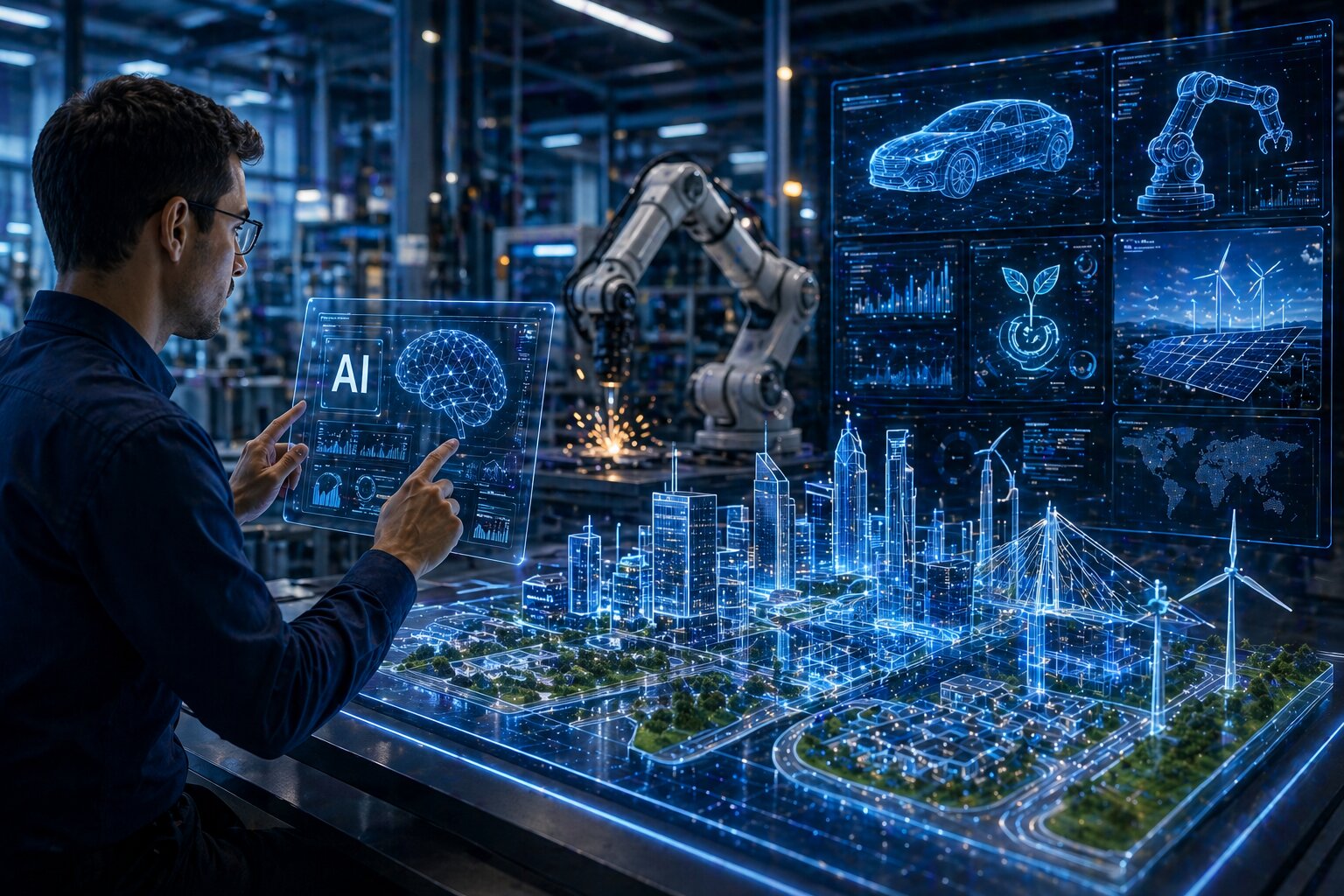
Digital twins are virtual representations of physical systems. They can represent machines, factories, buildings, vehicles, power systems, infrastructure or even wider urban environments. When connected to real-world data, they allow engineers to monitor performance, test scenarios and plan interventions.
AI can make digital twins more useful by helping interpret live data. A digital twin may show what is happening, while AI helps predict what could happen next. This combination can support predictive maintenance, energy optimisation, safety analysis and long-term planning.
A building digital twin might help reduce energy use. A factory twin might identify bottlenecks. A bridge twin might support structural monitoring. A grid twin might help manage distributed energy resources. A vehicle twin might help understand component wear over time.
The value of a digital twin depends on trust. It must be accurate enough to support decisions. It must be updated with reliable data. It must reflect real operating conditions rather than ideal assumptions.
AI can strengthen digital twins, but it can also make them more complex. Engineers must understand whether the twin is showing measured reality, simulated behaviour, predicted outcomes or a mixture of all three.
Robotics and autonomous systems are evolving
Robotics is where AI innovation becomes physically visible. A robot combines mechanical design, electrical systems, sensors, software and control. AI can improve perception, navigation, object handling and decision-making.
In factories, robots can inspect, assemble, weld, move and package. In warehouses, they can transport goods and coordinate with inventory systems. In agriculture, they can monitor crops and support precision operations. In infrastructure, drones and robotic systems can inspect bridges, pipelines, roofs and hazardous environments.
The direction of progress is toward more adaptable systems. Traditional automation works best when the environment is predictable. AI-supported robotics can handle more variation, but only within limits.
Autonomous systems must be engineered carefully because they interact with the physical world. A software error, sensor failure or poor decision can cause damage or injury. Safety cases, testing, fallback modes and human oversight are essential.
The strongest robotics innovation will not be measured only by autonomy. It will be measured by usefulness, reliability and safe integration into real environments.
AI is changing engineering software
AI innovation is also changing the software tools engineers use every day. Design platforms, simulation environments, documentation systems, project-management tools and maintenance platforms are all beginning to include AI-assisted features.
Some of these features help with search and summarisation. Others assist with code, design suggestions, anomaly detection, documentation review or workflow automation. Over time, AI may become less like a separate tool and more like a layer inside engineering software.
This could reduce friction. Engineers may be able to find past design decisions faster, compare revisions more easily, identify missing requirements or generate first-pass documentation. These tasks are not always glamorous, but they matter. Engineering failures can come from poor communication, unclear assumptions or missing information.
However, AI-generated documentation and summaries require caution. A fluent summary can hide omissions. A generated requirement can sound precise while being wrong. Engineering teams need review processes that treat AI outputs as drafts or decision support, not unquestioned truth.
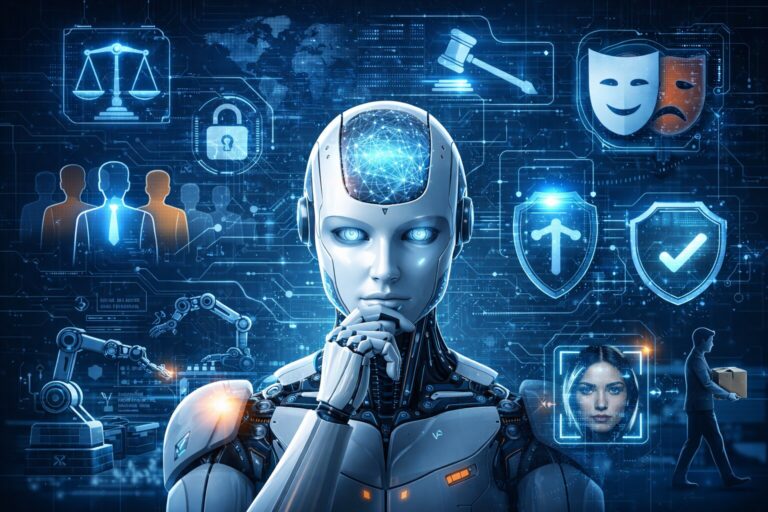
Safety, standards and responsibility
Engineering is different from many other fields because failure can have physical consequences. A weak structure, unsafe circuit, unreliable control system or poorly maintained machine can harm people and damage infrastructure.
That means AI innovation in engineering must be governed by standards, testing and accountability. A model should not be deployed simply because it performs well in a demonstration. It needs validation under realistic conditions. It needs monitoring after deployment. It needs clear limits.
Engineers must ask: What data was used? What conditions has the model seen? What happens when inputs are missing? How does the system respond to unusual cases? Who approves high-risk decisions? Can the result be audited? Can the system fail safely?
AI may change workflows, but it does not remove professional responsibility. If anything, it adds new responsibilities. Engineers must understand the digital tools they rely on well enough to challenge them.
This is especially important as more systems become autonomous or semi-autonomous. The more a system can act, the more important it is to define what it is allowed to do, when it must stop and when a human must intervene.
The skills engineers will need next
AI innovation will change the skills engineers need. Core engineering knowledge will remain essential. Mathematics, physics, materials, circuits, mechanics, thermodynamics, control theory and safety principles are not becoming obsolete.
But engineers will need stronger digital literacy. They will need to understand data quality, model behaviour, uncertainty, cybersecurity, simulation limits and software-defined systems. They will need to work more closely with data scientists, software developers, automation specialists and cybersecurity teams.
The most valuable engineers may be those who can bridge the physical and digital worlds. They will understand enough about AI to use it intelligently, but enough about engineering fundamentals to know when it is wrong.
This has implications for education and training. Engineering students should learn how AI tools work, where they are useful and where they can fail. Experienced engineers will also need opportunities to develop AI literacy without being expected to become full-time machine learning specialists.
The future will reward engineers who can ask better questions. What is the model optimising for? What is missing from the data? What uncertainty remains? What physical constraints cannot be ignored? What happens if the system fails?
The risk of innovation theatre
Not every AI feature in engineering will be meaningful. As AI becomes fashionable, some tools will be marketed as transformative even when they offer only minor improvements. Some products will add AI branding without solving a real engineering problem.
This is a risk because engineering teams have limited time, budget and attention. Innovation theatre can distract from practical improvements. A flashy dashboard may look impressive but fail to improve reliability. A generative design feature may produce attractive concepts but little usable value. A predictive model may be promoted before it has been validated properly.
The best test is whether the AI system improves an engineering outcome. Does it reduce failures? Does it save material? Does it improve safety? Does it shorten development time without weakening review? Does it help engineers understand a system better? Does it make maintenance more effective? Does it produce results that can be verified?
If the answer is unclear, the innovation may be more cosmetic than useful.
What AI innovation in engineering will look like
The next stage of AI innovation in engineering is likely to be quieter and more embedded than the public AI conversation suggests. It may not always look like a dramatic robot or a futuristic design interface. It may appear as better fault detection, smarter energy management, faster simulation, more efficient inspection, improved maintenance planning and more responsive control systems.
The most important innovations will probably combine several technologies. AI with digital twins. AI with edge computing. AI with robotics. AI with smart sensors. AI with advanced simulation. AI with secure industrial systems. AI with electrical and electronic hardware.
This is why the future of engineering cannot be understood through AI alone. It has to be understood as a systems shift. Computing has transformed engineering once already, and now AI is deepening that transformation by making digital systems more interpretive and adaptive.
The opportunity is substantial. AI can help engineers design better products, maintain infrastructure more intelligently, use energy more efficiently and respond to complex problems faster.
The responsibility is equally substantial. Engineering cannot rely on AI because it is new, impressive or commercially attractive. It must rely on AI only where it is tested, understood and appropriate.
AI innovation in engineering will matter most when it strengthens engineering judgement rather than replacing it. The future will belong to teams that can combine computational power with professional discipline, technical curiosity with scepticism, and digital speed with real-world accountability.
That is the real promise of AI in engineering: not machines designing the future alone, but engineers using better tools to build systems that are safer, smarter and more resilient.