What Is Prototyping in Programming?
Prototyping in programming is the practice of creating an early version of a software idea before the final system is fully developed. Instead of moving straight from concept to production code, developers build something smaller, faster, and more experimental so they can test assumptions, explore functionality, and understand whether the idea works in practice.
That early version may be simple or detailed depending on the project. In some cases, it is a rough interface mock-up with minimal logic behind it. In others, it may be a working technical model used to test whether a feature, integration, or architecture can function as expected. The important point is that a prototype is not usually the finished product. It is a tool for learning.
In programming, this matters because software projects often begin with uncertainty. A team may have a general goal but still be unclear about user flow, technical feasibility, system structure, or how different features should interact. Prototyping helps reduce that uncertainty before too much time and money are committed to full development.
Why prototyping matters in programming
Programming is not only about writing code that works. It is also about solving the right problem in the right way. A team can build a technically sound application and still discover too late that the user journey is confusing, the technical approach is inefficient, or the requirements were misunderstood from the start.
Prototyping helps prevent that. By building an early model, programmers and product teams can see how an idea behaves before production engineering begins in earnest. That creates a safer environment for experimentation. If something needs to change, it is usually cheaper and easier to change it at prototype stage than after the application has been fully developed.
This is one reason prototyping has become so common in modern software workflows. It improves communication, reduces avoidable risk, and gives teams evidence instead of assumptions.
For a broader explanation of where this fits in the overall discipline, it is useful to connect this topic with Prototyping in Software Engineering Explained.
What a programming prototype can look like
A prototype in programming can take several different forms. It is not always a polished app preview, and it is not always visual.
A prototype might be:
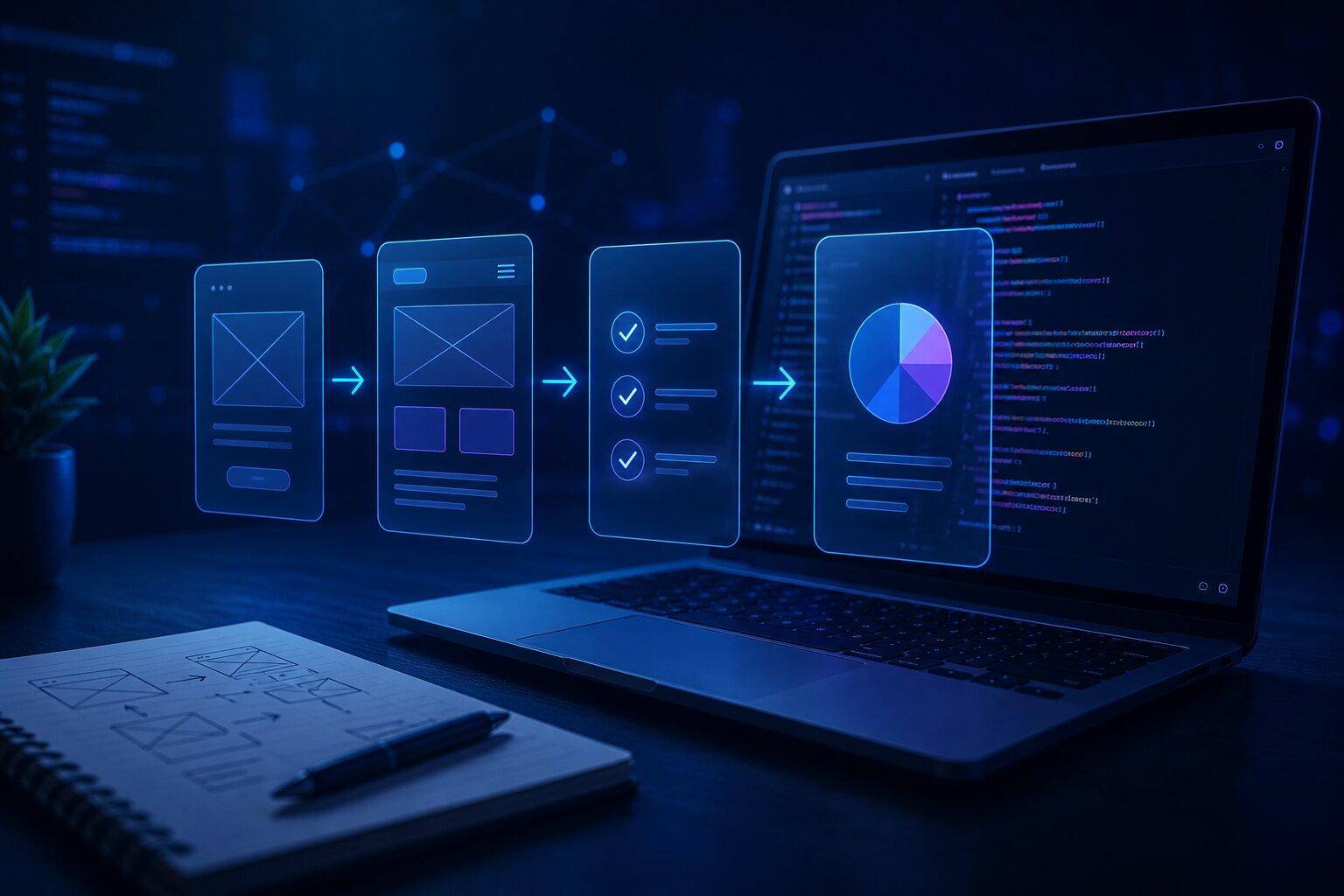
- a rough web interface showing how screens connect
- a small script proving that an API integration works
- a partial mobile app with key interactions only
- a simplified data flow showing how a process should behave
- a working proof that a new framework or feature is technically feasible
This variety is important because programming prototypes are built to answer specific questions. If the main uncertainty is user navigation, the prototype may focus on interface flow. If the uncertainty is technical, the prototype may focus on backend behaviour or performance.
In other words, a prototype is shaped by the kind of problem the programmer is trying to solve.
Prototyping versus building the final application
A common misunderstanding is that prototyping is just an early version of the finished app. Sometimes that is partly true, but not always. In many projects, the prototype is deliberately temporary. It is built quickly, tested, and then discarded once the team has learned what it needs to know.
This is because prototype code is often written with speed and experimentation in mind rather than long-term maintainability. A developer may hard-code values, simplify architecture, or bypass edge cases in order to test an idea rapidly. That is acceptable if the purpose is learning. It becomes a problem only if the team starts treating temporary code like production software without proper redesign.
The distinction matters because programming prototypes are about validation, not polish. They exist to answer questions, not necessarily to become the final product unchanged.
The main goals of prototyping in programming
Although prototypes vary, most programming prototypes serve one or more of a few main goals.
The first is clarifying requirements. A team may think it understands what a feature should do, but once something is built, missing details often become obvious. The prototype helps make those requirements visible.
The second is testing usability or flow. Even if the technical logic is sound, a feature may still feel awkward or confusing. A prototype allows that to be seen earlier.
The third is proving technical feasibility. A programmer may need to know whether a library, system, or architecture can support the intended feature before building more of the product around it.
The fourth is improving stakeholder communication. It is usually easier to discuss a visible prototype than an abstract description. Stakeholders can react more precisely when they can see or use something.
These goals explain why prototyping is valuable not just for developers, but also for product managers, designers, clients, and users.
Types of prototyping programmers should know
Programmers may use different prototyping approaches depending on the situation.
A throwaway prototype is built to explore an idea and then discarded. This is common when the goal is quick feedback rather than long-term reuse.
An evolutionary prototype starts small and is refined over time until it becomes part of the final application. This can work well in iterative development, but it requires stronger engineering discipline.
A technical prototype focuses on feasibility rather than interface design. For example, a developer might test whether a new database structure performs well enough, or whether an external service can handle the required requests.
A high-fidelity prototype is closer to the final experience, while a low-fidelity prototype is rougher and faster to produce.
Because these approaches solve different problems, it can be very helpful to read a deeper guide on software prototyping models in depth once the basics are clear.
Prototyping in programming languages and frameworks
Prototyping in programming is not tied to one language or stack. Developers can prototype in JavaScript, Python, TypeScript, Java, C#, PHP, or almost any other language depending on the project context.
A web developer may prototype quickly using JavaScript and a lightweight frontend framework. A backend engineer may use Python to test an algorithm or integration. A mobile developer may create a reduced version of an app in Swift or Kotlin. The exact technology matters less than the goal.
That said, some tools and platforms make prototyping easier. Rapid application frameworks, UI design platforms, low-code tools, and collaborative interface environments all help speed up the process. Developers working alongside designers may also use tools that are not pure programming tools but still influence the prototype stage.
This is why it can also be useful to explore prototyping in Figma for interface workflows, especially where design and programming overlap.
Benefits of prototyping for programmers
For programmers, prototyping offers several practical benefits.
It reduces the risk of building the wrong thing. A developer may discover early that a feature needs to behave differently or that users interpret it in an unexpected way.
It can save engineering time. While prototyping adds a step, it often prevents wasted development effort later. Rewriting a rough prototype is usually easier than redesigning a mature feature already built into a larger system.
It improves communication. Programmers often work with people who are less technical. A prototype gives those conversations something concrete to revolve around.
It also supports better technical decisions. Instead of guessing whether an approach will work, the team can test it.
In short, prototyping helps programmers make better choices before complexity increases.
Limits and risks of prototyping
Even though prototyping is useful, it is not automatically the right answer in every situation. A prototype still takes time, and if its purpose is unclear, it can become wasteful.
One risk is that stakeholders assume a prototype means the product is almost finished. If the prototype looks polished, they may underestimate the work still needed around architecture, security, testing, integrations, and scalability.
Another risk is that developers become too attached to experimental code. A quick prototype may solve the short-term question well but still be completely unsuitable for long-term use.
There is also the issue of false confidence. A prototype may prove that a narrow interaction works, while leaving much larger system problems unresolved. That is why the team has to be clear about what exactly the prototype is intended to prove.
When programmers should prototype
Prototyping is especially useful when:
- requirements are uncertain
- the feature is complex or unusual
- a user workflow needs testing
- the team is trying unfamiliar technology
- stakeholders need something visible to react to
- technical feasibility is not fully proven
It may be less necessary when the task is routine, well understood, and low risk. Not every bug fix or small feature needs a formal prototype. The value of prototyping rises when uncertainty rises.
That is why strong teams use prototyping selectively and intentionally. They do not prototype everything. They prototype the things most likely to benefit from early learning.
Prototyping as part of better software development
At its best, prototyping in programming is not just a preliminary step. It is part of a smarter development mindset. It recognises that software quality depends not only on correct code, but also on clear requirements, workable flows, realistic architecture, and early validation.
By creating something testable before the full system is built, programmers give themselves room to think, learn, and adjust. That leads to better technical outcomes and usually to better product outcomes as well.
It also helps bridge the gap between coding and product thinking. A prototype turns abstract ideas into something programmers, designers, and stakeholders can evaluate together. That shared visibility is often what makes later development more efficient.
Why understanding prototyping is useful
Prototyping in programming is useful because it gives developers a way to explore ideas before committing fully to them. It can test flows, reveal requirement gaps, prove technical feasibility, and improve communication across the whole project.
For programmers, it is one of the most practical ways to reduce uncertainty. Rather than assuming a feature will work exactly as imagined, the team builds something smaller, learns from it, and uses that learning to strengthen the final application.
That is why prototyping remains such an important part of modern development. It helps teams build with more clarity, less wasted effort, and better judgment.
If you enjoy publishing thoughtful software and development content like this, there is also a natural opportunity to write for us at Dykes Do Digital.