The Rise of AI Coding Assistants and How They Are Changing Software Development
Artificial intelligence is transforming the world of software development. In recent years, a new generation of tools known as AI coding assistants has emerged, helping developers write code faster, identify bugs more easily, and automate repetitive programming tasks.
These tools rely on machine learning models trained on massive datasets of programming languages, software documentation, and open-source code. By analysing these datasets, AI systems learn how different programming patterns work and can generate new code based on natural language prompts or partial code snippets.
As AI coding assistants become more capable, they are beginning to reshape how developers approach programming. While human expertise remains essential, AI is increasingly acting as a powerful collaborator in the software development process.
What Are AI Coding Assistants?
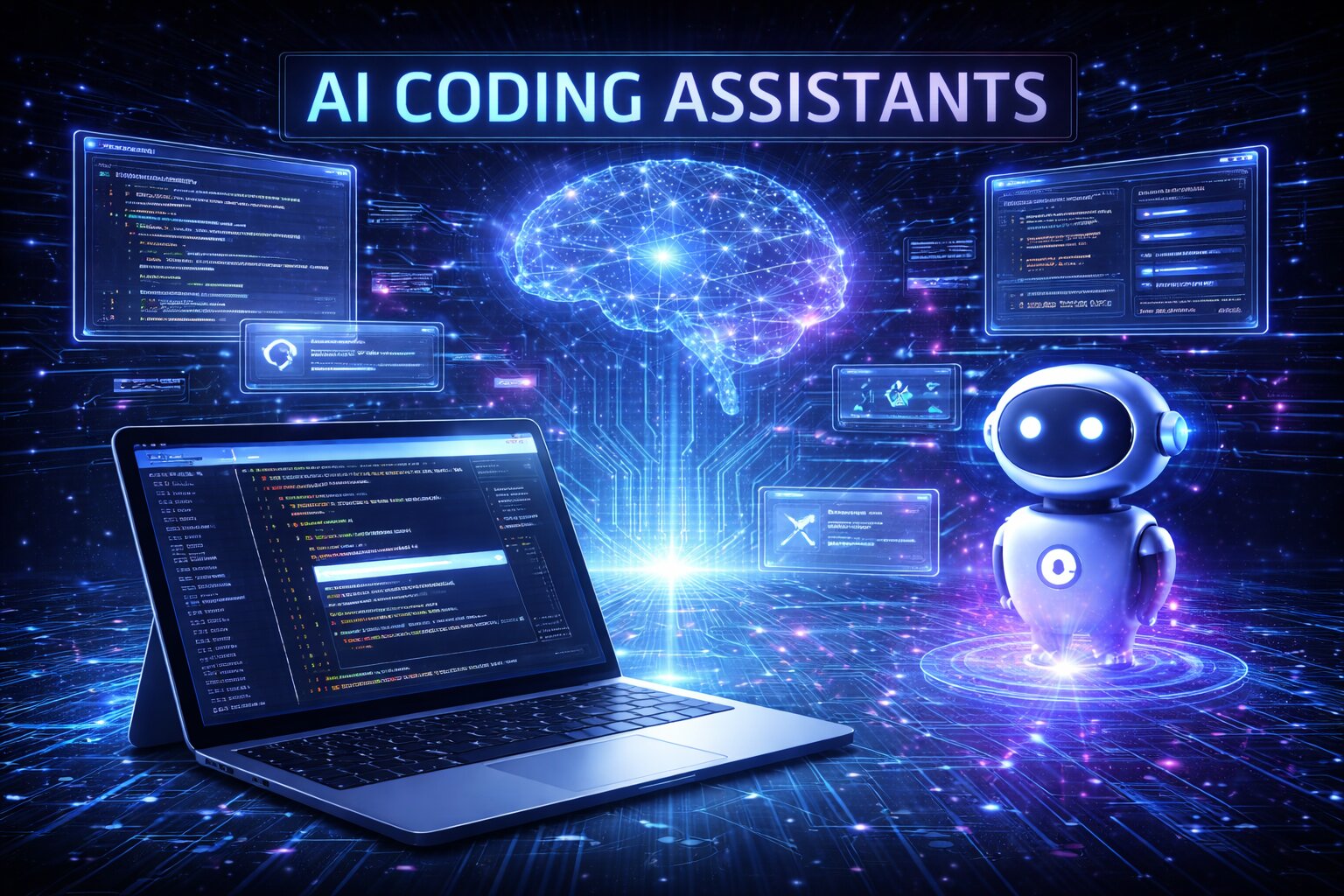
AI coding assistants are software tools designed to help developers write and manage code more efficiently. These tools typically integrate directly into code editors and development environments, where they analyse the code being written and provide suggestions in real time.
For example, a developer might begin writing a function in a programming language such as Python or JavaScript. The AI assistant can automatically suggest the next lines of code based on the structure of the program and the developer’s previous inputs.
Some systems go even further by allowing developers to describe what they want a program to do using plain language. The AI assistant can then generate the necessary code automatically.
These capabilities allow developers to complete many routine tasks much faster than with traditional coding methods.
Accelerating the Development Process
One of the most significant advantages of AI coding assistants is their ability to accelerate software development.
Developers often spend a large portion of their time writing repetitive code structures, searching documentation, or troubleshooting common errors. AI assistants can handle many of these tasks automatically.
For instance, an AI assistant might generate boilerplate code for common tasks such as database connections, API requests, or user authentication systems.
This allows developers to focus more on the overall design and functionality of their applications rather than spending time on repetitive technical details.
By reducing the time required to write and review code, AI tools can help teams move from concept to working software much more quickly.
Improving Code Quality
AI coding assistants are not only about speed — they can also help improve the quality of software.
Many AI tools are capable of analysing code for potential errors or inefficiencies. They may suggest alternative implementations that are more efficient or easier to maintain.
Some tools can automatically detect potential security vulnerabilities in code, helping developers identify issues before software is deployed.
This type of automated assistance can reduce the likelihood of bugs and improve overall code reliability.
While human developers still need to review and validate AI-generated code, these tools provide an additional layer of support that can help maintain high development standards.
Learning and Skill Development
AI coding assistants can also be valuable educational tools for new developers.
Programming can be challenging for beginners because it requires understanding complex concepts and syntax rules. AI tools can provide instant feedback, suggest improvements, and explain why certain coding approaches may work better than others.
For example, if a developer writes code that contains an error, the AI assistant may suggest corrections and explain the reasoning behind the changes.
This immediate feedback helps developers learn faster and gain confidence as they build their programming skills.
Even experienced programmers can benefit from these tools when working with unfamiliar programming languages or frameworks.
Collaboration Between Humans and AI
Despite the impressive capabilities of AI coding assistants, they are not designed to replace software developers. Instead, they are best understood as collaborative tools that support human creativity and problem-solving.
Software development involves many complex decisions related to architecture, system design, and user experience. These decisions require deep understanding and critical thinking that AI systems cannot fully replicate.
AI coding assistants are most effective when used as productivity tools that handle routine tasks while developers focus on higher-level problem-solving.
This collaboration between humans and AI may become a defining characteristic of the future software development environment.
Potential Risks and Limitations
Although AI coding assistants offer many benefits, they also present certain challenges.
One concern involves the accuracy of AI-generated code. Because AI models generate suggestions based on patterns in training data, they may occasionally produce incorrect or inefficient solutions.
Developers must therefore carefully review AI-generated code before using it in production systems.
Another issue involves security. If AI tools are trained on publicly available code repositories, they may inadvertently reproduce insecure coding patterns or outdated practices.
There are also questions about intellectual property and licensing. Some developers have raised concerns about whether AI-generated code could reproduce portions of copyrighted source code from training datasets.
These issues are still being actively discussed within the software development community.
Changing the Role of Developers
The widespread adoption of AI coding tools may also influence how developers work in the future.
Instead of focusing primarily on writing individual lines of code, developers may increasingly focus on defining system requirements, reviewing AI-generated outputs, and designing high-level architectures.
In some ways, programming may become more about guiding intelligent systems than writing every detail manually.
This shift could make software development more accessible to people who are not traditional programmers. Individuals with domain expertise in fields such as healthcare, finance, or engineering may be able to build software tools with the assistance of AI coding platforms.
At the same time, experienced developers will remain essential for managing complex systems and ensuring that software operates reliably.
The Future of AI-Assisted Programming
AI coding assistants are still evolving rapidly. As machine learning models become more advanced, these tools may gain the ability to generate entire applications from high-level descriptions.
Future systems may integrate more deeply with development environments, testing frameworks, and deployment pipelines.
For example, an AI assistant might generate code, run automated tests, identify potential issues, and suggest improvements before a developer even reviews the program.
These capabilities could dramatically reduce the time required to build and deploy software.
However, human oversight will remain critical to ensure that systems behave safely and reliably.
A New Era for Software Development
The rise of AI coding assistants marks an important shift in how software is created.
For decades, programming required developers to write most code manually. Today, intelligent tools are beginning to automate many aspects of the development process.
Rather than replacing developers, AI coding assistants are likely to become essential tools that enhance productivity and support innovation.
As these technologies continue to improve, they may make software development faster, more collaborative, and more accessible to people across many industries.
In the years ahead, the relationship between developers and AI systems will likely become one of the most important partnerships in the world of technology.