The Rise of AI in Healthcare: Companies, Innovation, and Challenges
Artificial intelligence is playing an increasingly central role in the transformation of healthcare. From diagnostics and drug discovery to patient monitoring and administrative automation, AI technologies are reshaping how healthcare systems operate and how care is delivered. What was once an experimental field is now becoming a core component of modern medical innovation.
This shift is being driven not only by technological advances but also by growing demand. Ageing populations, rising healthcare costs, and increasing pressure on medical systems are creating a need for more efficient, scalable, and data-driven solutions. AI offers the potential to address many of these challenges, but its integration into healthcare also raises important questions about safety, ethics, and regulation.
The Emergence of AI-Driven Healthcare Companies
A new generation of companies is emerging at the intersection of healthcare and artificial intelligence. These organisations are focused on developing tools that can analyse medical data, assist in diagnosis, and improve patient outcomes.
Some companies specialise in medical imaging, using AI to detect patterns in X-rays, MRIs, and CT scans. These systems can assist radiologists by highlighting potential abnormalities, improving both speed and accuracy.
Others are focused on drug discovery, where AI is used to analyse molecular structures and predict how different compounds will interact. This can significantly reduce the time and cost associated with developing new medications.
There are also companies working on virtual health assistants, predictive analytics, and personalised treatment platforms. Together, these innovations are contributing to a rapidly evolving healthcare ecosystem.
Improving Diagnostics and Early Detection
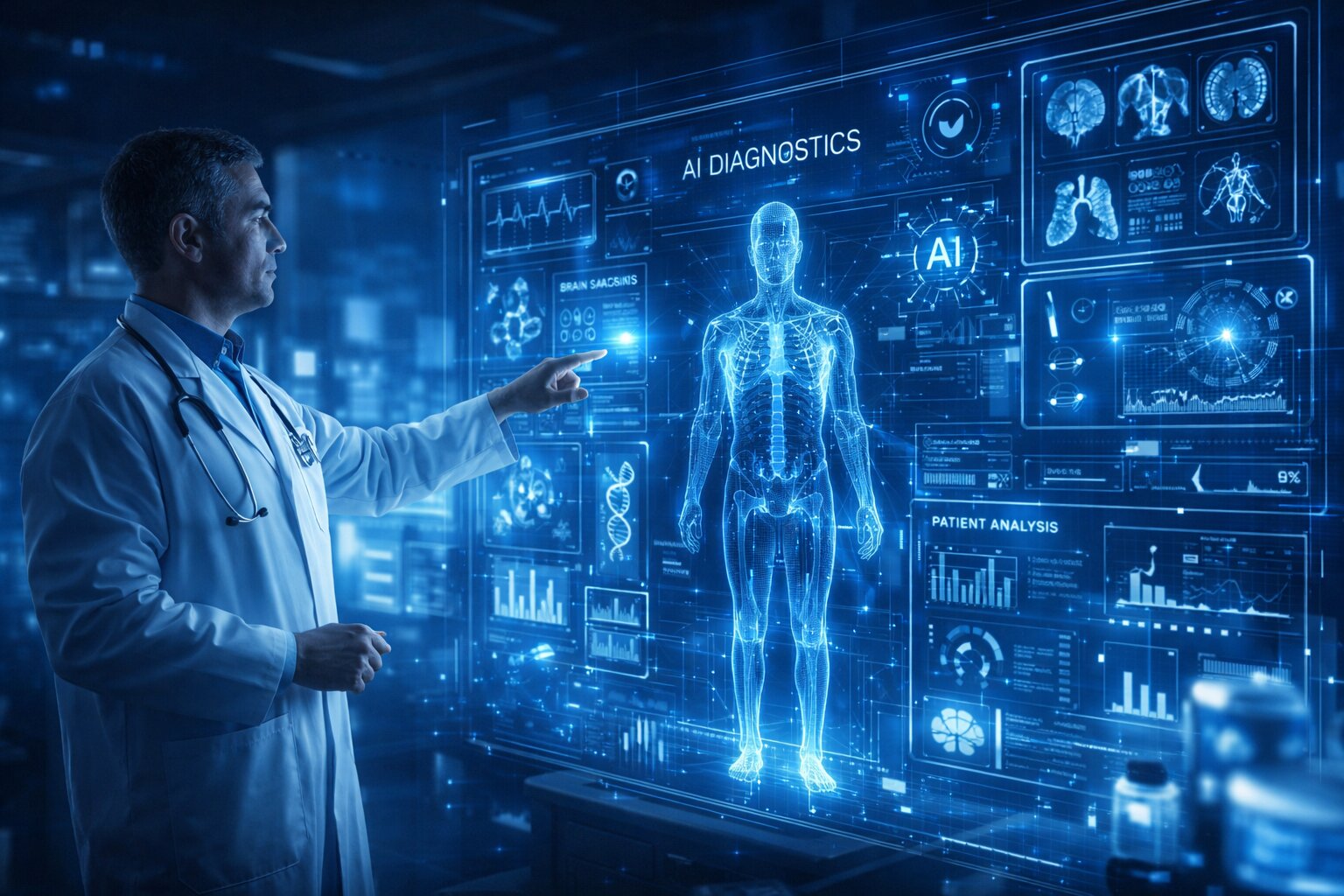
One of the most promising applications of AI in healthcare is in diagnostics. Machine learning models can analyse large datasets to identify patterns that may not be visible to human clinicians.
In medical imaging, AI systems can detect signs of diseases such as cancer, cardiovascular conditions, and neurological disorders. By identifying these patterns at an early stage, AI can support earlier diagnosis and intervention.
Beyond imaging, AI is also being used to analyse patient data, including medical histories, genetic information, and real-time health metrics. This can help identify risk factors and predict the likelihood of certain conditions.
Early detection is particularly important in improving outcomes, as many diseases are more treatable when identified at an early stage.
Personalised Medicine and Treatment
AI is enabling a more personalised approach to healthcare, where treatments are tailored to individual patients rather than based on generalised guidelines.
By analysing data from multiple sources, including genetic information, lifestyle factors, and clinical records, AI systems can provide insights into how different patients may respond to specific treatments.
This approach, often referred to as precision medicine, has the potential to improve treatment effectiveness and reduce side effects. For example, AI can help identify which cancer therapies are most likely to be effective for a particular patient based on their genetic profile.
Personalised medicine represents a significant shift in how healthcare is delivered, moving away from a one-size-fits-all model toward more targeted and data-driven care.
Streamlining Healthcare Operations
In addition to clinical applications, AI is also being used to improve the efficiency of healthcare operations. Administrative tasks such as scheduling, billing, and documentation can be automated, reducing the burden on healthcare professionals.
Natural language processing (NLP) tools can transcribe and analyse clinical notes, allowing doctors to spend more time with patients and less time on paperwork.
Predictive analytics can also be used to optimise resource allocation, such as predicting patient admissions or identifying bottlenecks in hospital workflows.
These improvements can enhance the overall efficiency of healthcare systems, helping to reduce costs and improve patient experiences.
Remote Monitoring and Digital Health
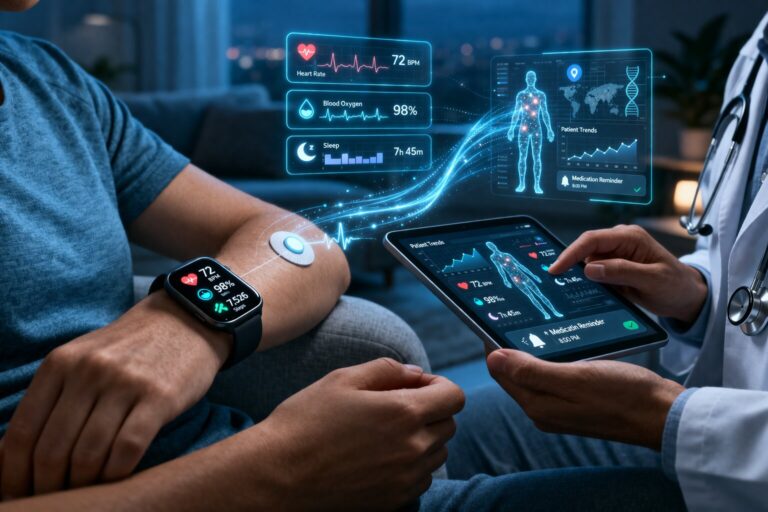
The integration of AI with wearable devices and digital health platforms is enabling new forms of patient monitoring. Real-time data from sensors can be analysed to track health metrics and detect potential issues.
This is particularly valuable for managing chronic conditions, where continuous monitoring can provide insights into disease progression and treatment effectiveness.
Remote monitoring also supports a shift toward decentralised healthcare, where patients can receive care outside of traditional clinical settings. This can improve accessibility and reduce the need for hospital visits.
AI plays a key role in analysing the data generated by these systems, turning raw information into actionable insights.
Challenges in Data Quality and Integration
Despite its potential, the use of AI in healthcare faces significant challenges related to data. Healthcare data is often fragmented, stored across different systems, and subject to strict privacy regulations.
Ensuring that data is accurate, consistent, and accessible is essential for effective AI applications. Poor data quality can lead to incorrect predictions and unreliable outcomes.
Integration is another challenge. Healthcare systems often rely on legacy infrastructure, which can make it difficult to implement new technologies.
Addressing these issues requires investment in data infrastructure, standardisation, and interoperability.
Ethical and Regulatory Considerations
The use of AI in healthcare raises important ethical and regulatory questions. Patient safety is a primary concern, and AI systems must be thoroughly tested and validated before being deployed in clinical settings.
There are also questions about transparency and accountability. If an AI system contributes to a medical decision, it is important to understand how that decision was made and who is responsible.
Privacy is another key issue. Healthcare data is highly sensitive, and ensuring that it is protected is essential for maintaining trust.
Regulators are working to establish frameworks that ensure safety and effectiveness while supporting innovation. However, keeping pace with rapid technological change remains a challenge.
The Role of Human Expertise
While AI can enhance healthcare, it is not a replacement for human expertise. Clinicians bring experience, judgment, and empathy that cannot be replicated by machines.
AI is best viewed as a tool that supports decision-making rather than replaces it. By providing insights and recommendations, AI can help clinicians make more informed decisions.
Maintaining this balance is important for ensuring that technology complements rather than disrupts the human aspects of healthcare.
The Future of AI in Healthcare
The role of AI in healthcare is likely to expand as technology continues to evolve. Advances in machine learning, data analytics, and computing power will enable more sophisticated applications.
Future developments may include more accurate diagnostic tools, improved predictive models, and greater integration with digital health systems.
There is also potential for AI to support global health initiatives, improving access to care in underserved regions.
As these technologies develop, ongoing attention to ethical, regulatory, and practical considerations will be essential.
A Transformative Shift in Healthcare
The rise of AI in healthcare represents a significant transformation in how medical systems operate. By improving diagnostics, enabling personalised treatment, and enhancing efficiency, AI has the potential to deliver substantial benefits.
At the same time, its adoption must be carefully managed to address challenges related to data, ethics, and regulation.
Understanding this balance is key to realising the full potential of AI in healthcare. As innovation continues, the integration of intelligent systems into healthcare will remain one of the most important developments shaping the future of medicine.