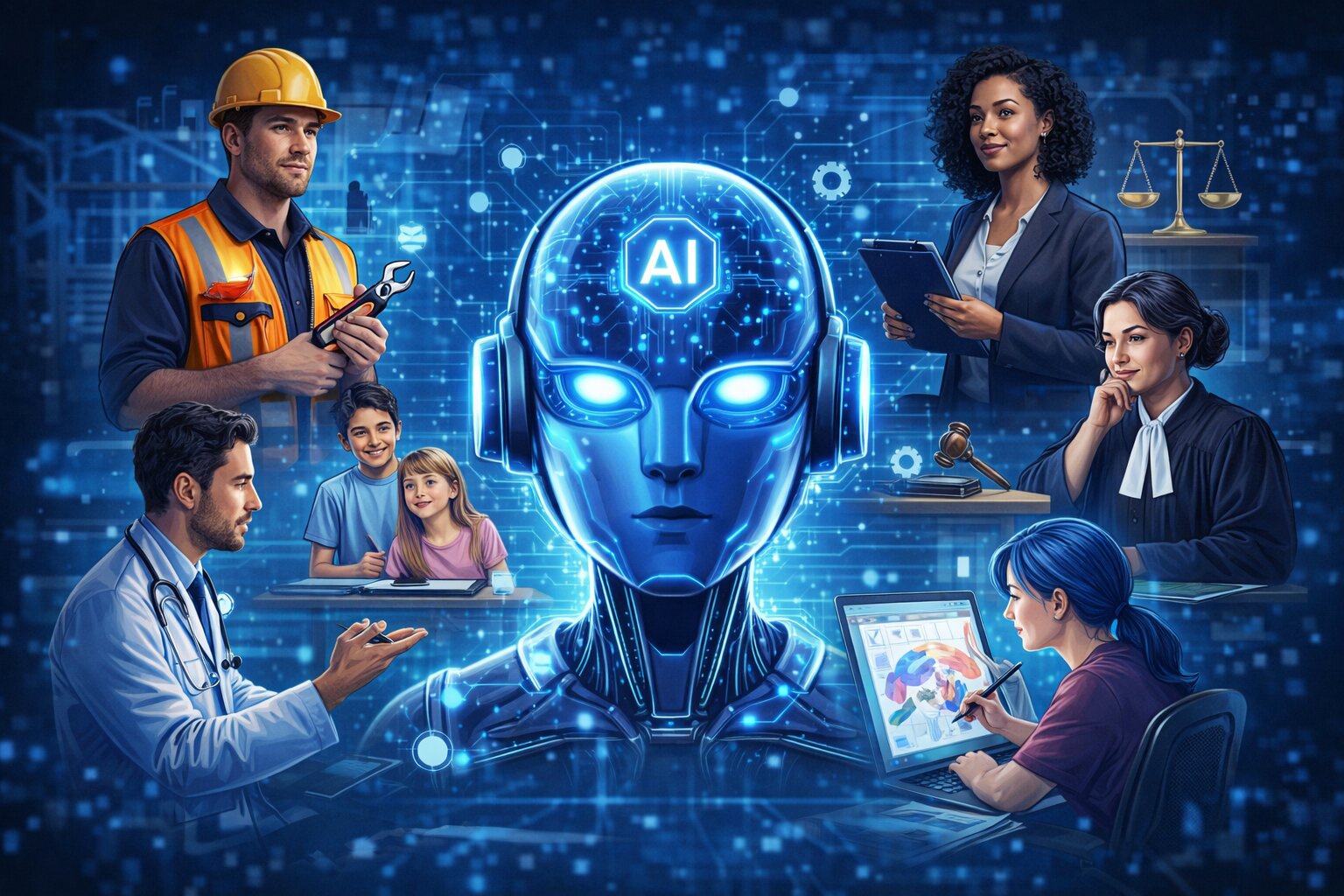
What Jobs Will AI Not Replace? Understanding the Limits of Automation
Artificial intelligence is transforming the nature of work across industries. From automating routine administrative tasks to assisting in complex decision-making, AI is reshaping how organisations operate and how individuals contribute. As these technologies continue to advance, a common question emerges: which jobs are most at risk—and, perhaps more importantly, which are not?
While AI has demonstrated impressive capabilities, it is not a universal replacement for human labour. Certain types of work remain difficult to automate due to their reliance on creativity, emotional intelligence, adaptability, and human judgment. Understanding these limitations provides a more balanced perspective on the future of work and the evolving relationship between humans and machines.
The Difference Between Tasks and Jobs
To understand which jobs AI may not replace, it is important to distinguish between tasks and roles. Most jobs consist of a combination of tasks, some of which may be automatable while others are not.
AI is particularly effective at handling structured, repetitive, and data-driven tasks. However, many roles involve a mix of technical, interpersonal, and creative responsibilities that cannot be fully automated.
This means that rather than eliminating entire jobs, AI is more likely to transform them. Workers may spend less time on routine activities and more time on tasks that require human skills.
The Importance of Human Creativity
Creativity remains one of the most challenging areas for AI. While generative AI systems can produce text, images, and music, they do so by analysing patterns in existing data rather than creating truly original ideas in a human sense.
Roles that require creative thinking, innovation, and the ability to generate new concepts are less likely to be fully automated. This includes professions such as designers, writers, artists, and strategic thinkers.
Creativity often involves context, cultural understanding, and the ability to connect ideas in novel ways—qualities that are difficult to replicate through algorithms alone.
Emotional Intelligence and Human Interaction
Jobs that rely heavily on emotional intelligence are also resistant to automation. These roles require empathy, communication, and an understanding of human behaviour.
Healthcare professionals, therapists, teachers, and social workers, for example, must navigate complex emotional situations and build relationships with individuals. While AI can assist in these fields, it cannot replace the human connection that is central to these roles.
Similarly, leadership positions often require interpersonal skills, negotiation, and the ability to inspire and motivate others—areas where human qualities remain essential.
Complex Problem-Solving and Adaptability
AI systems are highly effective within defined parameters, but they can struggle with unstructured problems and rapidly changing environments.
Jobs that require complex problem-solving, critical thinking, and adaptability are less likely to be fully automated. This includes roles in research, engineering, and strategic decision-making.
Humans are able to draw on a wide range of experiences, make judgments in uncertain situations, and adapt to new challenges. These capabilities are difficult to replicate in AI systems, particularly when problems do not have clear or predictable solutions.
Skilled Trades and Physical Work
While automation has made significant advances in manufacturing and logistics, many forms of physical work remain difficult to automate.
Skilled trades such as electricians, plumbers, and construction workers often operate in dynamic and unpredictable environments. These roles require manual dexterity, problem-solving, and the ability to adapt to varying conditions.
Robotics can assist in certain aspects of these jobs, but fully replacing human workers in these contexts remains challenging.
The Role of Ethics and Judgment
Many professions involve ethical considerations and decision-making that cannot be easily encoded into algorithms. Legal professionals, policymakers, and healthcare providers often make decisions that require balancing multiple factors, including ethical, social, and contextual considerations.
AI can provide data and recommendations, but the final decision often requires human judgment. This is particularly important in situations where outcomes have significant consequences.
The need for accountability and responsibility further reinforces the role of humans in these processes.
Education and Mentorship
Education is another area where human involvement remains critical. While AI can support learning through personalised content and automated assessments, teaching involves more than delivering information.
Educators play a role in guiding, mentoring, and motivating students. They adapt their approach based on individual needs and create learning environments that foster curiosity and critical thinking.
These aspects of education are deeply human and difficult to replicate through technology alone.
The Emergence of Hybrid Roles
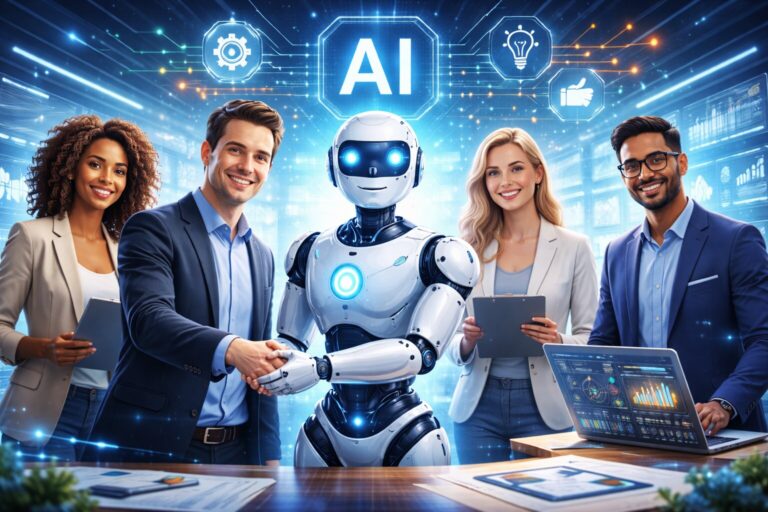
Rather than replacing jobs entirely, AI is contributing to the emergence of hybrid roles that combine human expertise with technological capabilities.
In many fields, professionals are working alongside AI systems, using them as tools to enhance productivity and decision-making. This collaboration allows humans to focus on higher-level tasks while AI handles more routine activities.
For example, in healthcare, AI can assist with diagnostics, but doctors remain responsible for interpreting results and interacting with patients. In business, AI can analyse data, but leaders must make strategic decisions based on broader considerations.
Challenges and Uncertainty
While it is possible to identify areas where AI is less likely to replace human workers, the future of work remains uncertain. Technological advancements may expand the capabilities of AI, potentially affecting roles that are currently considered secure.
At the same time, new jobs are likely to emerge as a result of technological change. The challenge lies in preparing for this transition, ensuring that workers have the skills needed to adapt to new roles.
Education, training, and lifelong learning will play a key role in navigating these changes.
A Shift in How Work Is Defined
The impact of AI on employment is not simply about replacement; it is about transformation. As technology changes the nature of work, the focus is shifting toward skills that complement AI rather than compete with it.
These include creativity, emotional intelligence, critical thinking, and adaptability—qualities that are inherently human.
Understanding this shift can help individuals and organisations prepare for a future where humans and machines work together rather than in opposition.
The Enduring Value of Human Skills
AI will continue to influence the workplace, but it is unlikely to eliminate the need for human contribution. Instead, it will redefine roles and highlight the importance of uniquely human skills.
Jobs that involve creativity, empathy, complex decision-making, and adaptability are likely to remain essential. These roles reflect aspects of human experience that technology cannot easily replicate.
As the relationship between humans and AI evolves, the most resilient roles will be those that leverage the strengths of both.
Navigating the Future of Work
The question of which jobs AI will not replace is ultimately a question about what makes human work valuable. While technology can enhance efficiency and automate certain tasks, it cannot fully replicate the depth and complexity of human capabilities.
By focusing on skills that are difficult to automate and embracing collaboration with technology, individuals can navigate the changing landscape of work with greater confidence.
The future of work is not defined by replacement, but by adaptation—and by the continued relevance of human insight in an increasingly automated world.