Why the Future of Technology Will Be Defined by Automation
Automation has long been a central goal of technological progress. From early industrial machinery to modern computer systems, technology has consistently evolved toward performing tasks faster, more efficiently, and with less human intervention. Today, advances in artificial intelligence, robotics, and software engineering are accelerating this trend dramatically.
Across industries, automation is transforming how businesses operate, how services are delivered, and how individuals interact with technology in everyday life. What once required hours of manual effort can now often be completed in seconds through intelligent systems capable of analysing data, executing workflows, and adapting to changing conditions.
As these technologies continue to mature, automation is likely to become one of the defining forces shaping the future of the digital economy.
From Mechanical Automation to Intelligent Systems
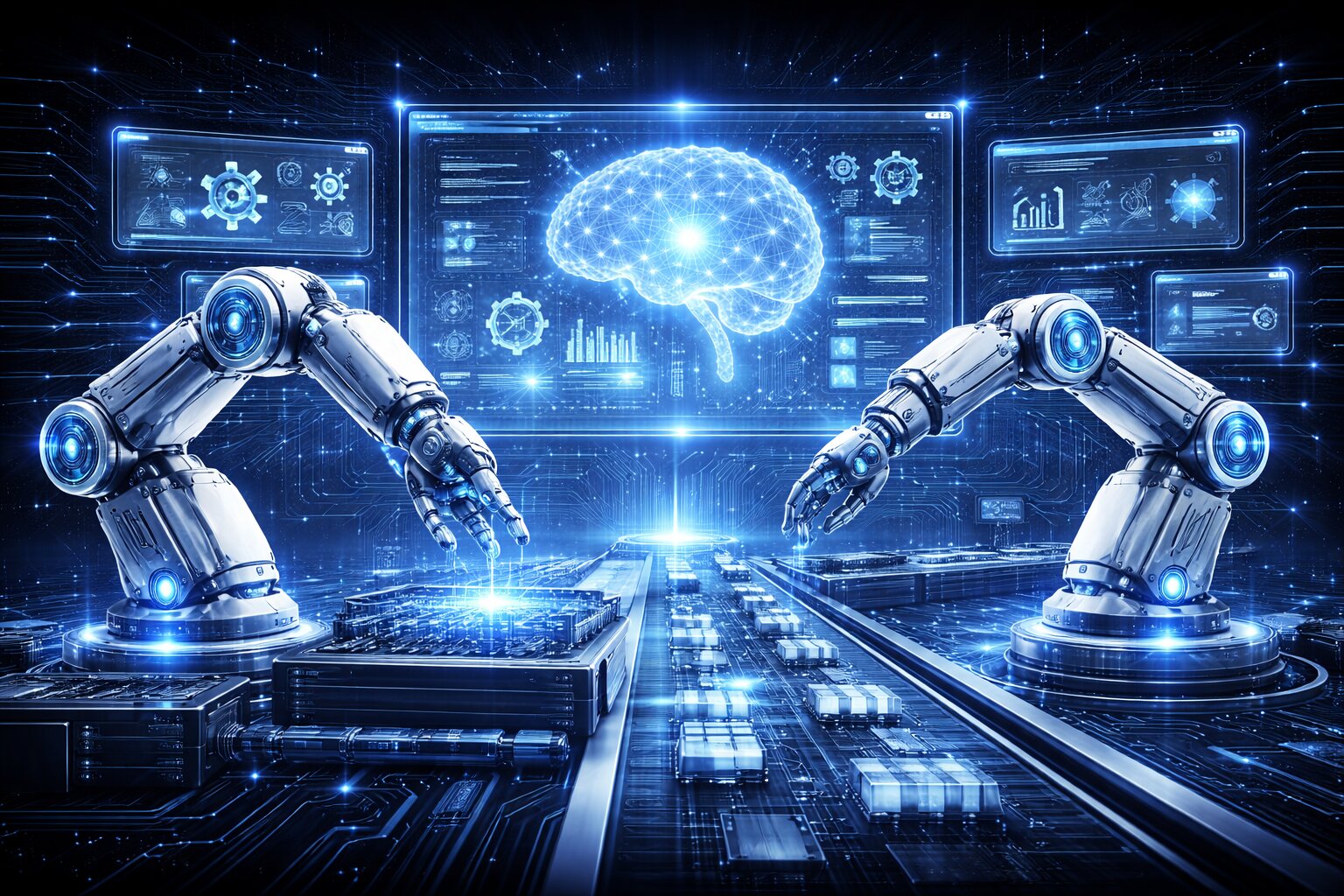
Automation is not a new concept. During the Industrial Revolution, mechanical systems were introduced to automate repetitive manual labour in manufacturing. Machines such as automated looms and assembly lines dramatically increased productivity while reducing the need for human workers to perform repetitive tasks.
The rise of computers brought a new form of automation to office environments. Software systems allowed businesses to automate calculations, record keeping, and data processing.
However, these early forms of automation were limited to tasks that could be defined through strict rules.
Artificial intelligence is now expanding the scope of automation far beyond these boundaries. Machine learning systems can analyse complex data, identify patterns, and make decisions in situations that previously required human judgement.
This shift from rule-based automation to intelligent automation is opening the door to entirely new capabilities.
Automation in the Workplace
One of the most visible impacts of automation is occurring within the workplace. Businesses are increasingly adopting technologies that streamline workflows and reduce the amount of manual work required for routine tasks.
Automation software can handle a wide range of processes, including data entry, customer support, document processing, and supply chain management. Robotic process automation (RPA) tools allow companies to create software “bots” that perform repetitive digital tasks across multiple systems.
For example, an automated system might process invoices, update financial records, and send confirmation emails without human involvement.
These tools allow employees to focus on higher-level work such as strategy, problem-solving, and creative development.
In many cases, automation is not about replacing workers entirely but about augmenting human capabilities.
The Rise of Autonomous Systems
Automation is also expanding into more complex environments through the development of autonomous systems. Autonomous technologies are capable of operating independently while responding dynamically to changing conditions.
Self-driving vehicles represent one of the most widely discussed examples. These systems rely on sensors, machine learning algorithms, and real-time data analysis to navigate roads without human control.
Similar technologies are being developed in other industries as well. Autonomous robots are increasingly used in warehouses to manage inventory and transport goods. Agricultural systems can monitor crops and perform precision farming tasks with minimal human supervision.
As these technologies improve, autonomous systems may play a larger role in logistics, transportation, and infrastructure management.
Automation and Artificial Intelligence
Artificial intelligence is a key driver behind many modern automation systems. AI enables software and machines to perform tasks that require perception, reasoning, and decision-making.
For example, AI-powered customer service systems can analyse incoming support requests and provide automated responses. Document processing systems can extract information from invoices, contracts, and forms with remarkable accuracy.
Machine learning models can also identify patterns in large datasets, allowing automated systems to detect fraud, predict equipment failures, or optimise production processes.
By combining automation with artificial intelligence, organisations can build systems that continuously learn and improve over time.
Automation in Everyday Life
Automation is not limited to industrial or corporate environments. Many everyday technologies now incorporate automated features that simplify daily routines.
Smart home systems can automatically adjust lighting, heating, and security settings based on user preferences. Smartphones use automation to organise photos, filter spam messages, and suggest calendar events.
Streaming platforms automatically recommend content based on viewing habits, while navigation apps adjust routes dynamically based on real-time traffic data.
These examples illustrate how automation is gradually becoming embedded into the digital services people rely on every day.
As intelligent automation becomes more widespread, many routine tasks may be handled automatically by background systems.
Economic and Social Implications
The growing role of automation raises important economic and social questions. Some analysts argue that automation could significantly reshape labour markets by reducing the demand for certain types of jobs.
Roles that involve repetitive or predictable tasks may be particularly vulnerable to automation. At the same time, new technologies often create entirely new industries and job opportunities.
Historically, technological innovation has both disrupted and expanded employment in different ways.
Preparing workers for these changes will require investments in education, training, and lifelong learning. As automation evolves, developing skills related to creativity, problem-solving, and complex decision-making may become increasingly valuable.
Responsible Automation
As automation technologies become more powerful, it is also important to ensure that they are implemented responsibly.
Automated systems can influence decisions that affect individuals and organisations, making transparency and accountability essential. Developers must carefully consider how automated systems are designed and how decisions are made.
In some cases, human oversight may remain necessary to ensure that automated processes operate fairly and ethically.
Responsible automation also requires careful attention to data security and privacy. Many automated systems rely on analysing large datasets, making it essential to protect sensitive information.
Balancing innovation with responsible governance will be an important challenge as automation technologies continue to advance.
The Road Ahead
Automation is likely to become an increasingly central feature of modern technology. Advances in artificial intelligence, robotics, and computing infrastructure are enabling systems that can perform complex tasks with minimal human intervention.
While the full impact of these technologies will take time to unfold, it is clear that automation will continue to shape how businesses operate and how people interact with digital systems.
Rather than eliminating human involvement entirely, the future of automation may involve closer collaboration between people and intelligent machines.
In this emerging landscape, automation will not simply be a tool for efficiency. It will become a foundational element of the digital world — redefining productivity, innovation, and the way technology supports everyday life.