Will Artificial Intelligence Create More Jobs Than It Replaces?
Few technologies in modern history have sparked as much debate about the future of work as artificial intelligence. As AI systems become increasingly capable of performing complex tasks, many people are beginning to ask an important question: will artificial intelligence ultimately create more jobs than it replaces?
Throughout history, technological innovation has often transformed labour markets. New technologies frequently automate certain tasks while simultaneously creating entirely new industries and career opportunities.
Artificial intelligence may follow a similar pattern. However, the speed and scale of AI development mean that its impact on employment could be more dramatic than previous technological shifts.
Understanding how AI may reshape the workforce is therefore one of the most important economic and social challenges of the coming decades.
Automation and Job Displacement
One of the primary concerns surrounding artificial intelligence is the potential for automation to replace human workers.
AI systems are already capable of performing many tasks that once required human labour. Machine learning algorithms can analyse data, recognise images, process language, and make predictions with increasing accuracy.
In industries such as manufacturing, logistics, and customer service, automation technologies are already replacing certain routine roles.
For example, automated systems can manage warehouse operations, process financial transactions, or handle basic customer inquiries through chatbots.
As AI technology continues to improve, these capabilities may expand into additional sectors.
Jobs that involve repetitive tasks or predictable workflows are often considered most vulnerable to automation.
Lessons From Previous Technological Revolutions
While automation can displace certain types of jobs, history suggests that technological progress also creates new forms of employment.
The Industrial Revolution replaced many forms of manual labour but also created entirely new industries such as manufacturing, transportation, and engineering.
Similarly, the rise of computers and the internet transformed office work while generating new fields such as software development, digital marketing, and cybersecurity.
These examples illustrate how technology can shift labour demand rather than simply eliminate jobs altogether.
Artificial intelligence may follow a similar trajectory by automating some tasks while increasing demand for new skills and professions.
New Roles Emerging in the AI Economy
The growth of artificial intelligence is already creating new types of jobs across the technology sector.
Machine learning engineers, data scientists, AI researchers, and robotics specialists are now among the fastest-growing professional roles.
Beyond technical positions, AI adoption is also creating opportunities in areas such as AI ethics, regulatory compliance, and digital infrastructure management.
Companies deploying AI systems require professionals who can design, manage, and evaluate these technologies responsibly.
In addition, many industries are creating roles focused on integrating AI tools into existing workflows.
For example, businesses may hire specialists to help teams use AI-powered analytics platforms or automate operational processes.
These emerging professions illustrate how technological change can generate entirely new career paths.
Augmentation Rather Than Replacement
Another important perspective on artificial intelligence involves the concept of job augmentation.
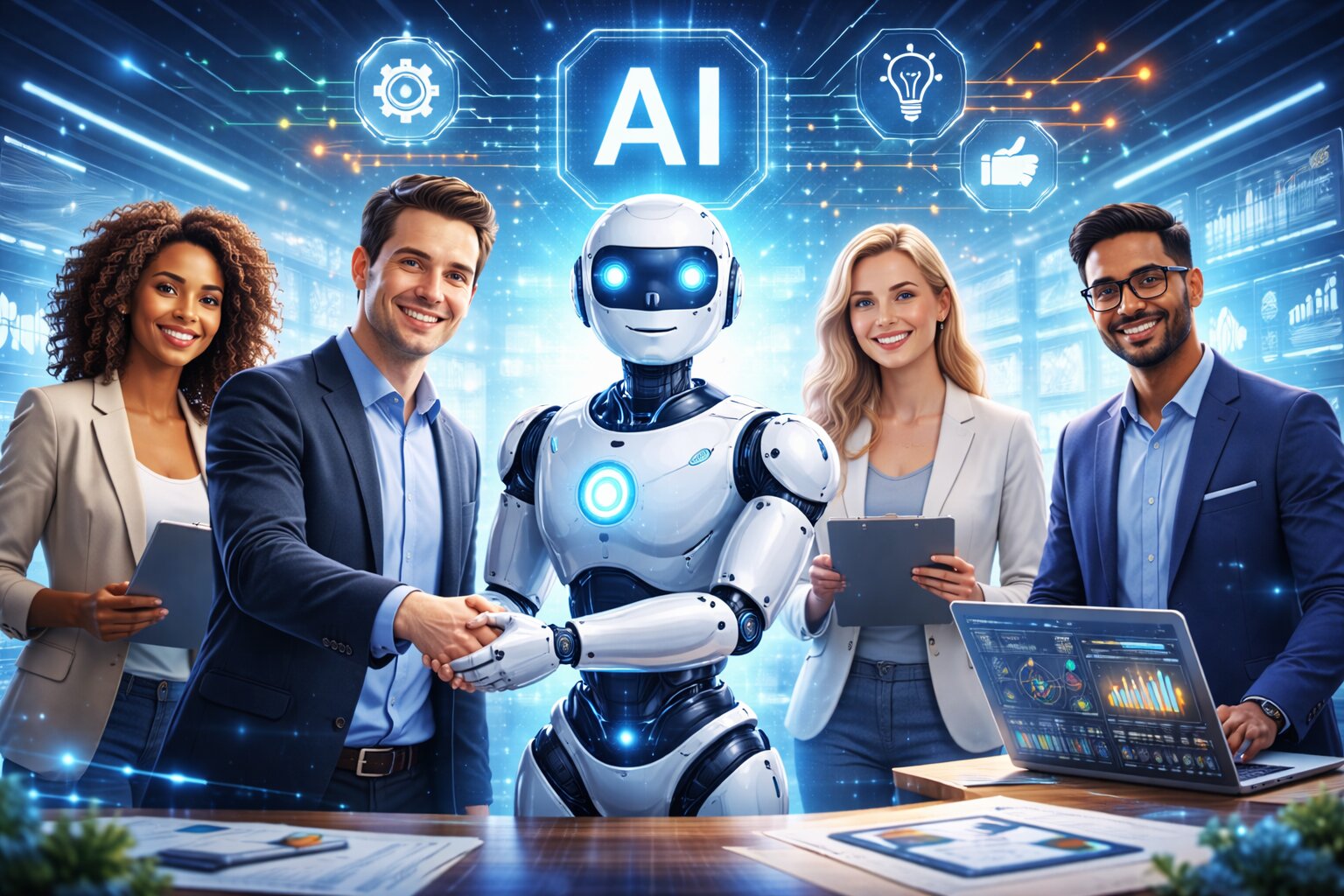
Instead of replacing workers entirely, AI systems may increasingly function as tools that enhance human productivity.
In many industries, AI is used to support professionals rather than replace them.
Doctors can use AI systems to analyse medical images more quickly. Financial analysts can use machine learning tools to identify patterns in complex datasets. Engineers can rely on AI-powered design tools to optimise technical systems.
In these cases, AI handles routine analytical tasks while human experts focus on interpretation, strategy, and decision-making.
This collaborative model between humans and intelligent systems may become increasingly common across the workforce.
Skills for the Future Workforce
As artificial intelligence transforms the workplace, the skills required for many jobs are likely to evolve.
Technical skills related to data analysis, programming, and digital systems will remain in high demand. However, uniquely human abilities may become even more valuable.
Skills such as critical thinking, creativity, problem-solving, communication, and emotional intelligence are difficult for AI systems to replicate.
Workers who can combine technical knowledge with these broader capabilities may be particularly well positioned in an AI-driven economy.
Education systems and workforce training programs will play an important role in preparing people for these changes.
Encouraging lifelong learning and continuous skill development will be essential as technology continues to evolve.
The Risk of Economic Disruption
Despite the potential for job creation, the transition toward an AI-driven economy may still create short-term disruptions.
Workers in industries heavily affected by automation may face challenges adapting to new roles.
For example, employees whose jobs involve highly repetitive tasks may need access to retraining programs in order to transition into new positions.
Without adequate support systems, technological change can create economic inequality and labour market instability.
Governments and businesses may therefore need to invest in workforce development initiatives that help workers adapt to emerging technologies.
The Role of Policy and Education
Public policy will likely play a critical role in shaping how AI affects employment.
Governments may need to develop strategies that support job transitions, encourage skill development, and promote inclusive economic growth.
Education systems may also need to evolve to better prepare students for a rapidly changing labour market.
In addition to traditional academic subjects, students may benefit from learning digital literacy, problem-solving techniques, and interdisciplinary skills.
These capabilities can help individuals adapt to evolving technologies throughout their careers.
Collaboration between industry, educational institutions, and policymakers will be essential in preparing the workforce for the AI era.
AI and the Global Economy
Artificial intelligence is expected to have significant economic impacts across many industries.
Some estimates suggest that AI could contribute trillions of dollars to the global economy over the coming decades.
This growth may be driven by productivity improvements, new digital services, and entirely new business models.
Industries such as healthcare, finance, manufacturing, and transportation may all experience significant transformations as AI technologies become more widely adopted.
As these industries evolve, new employment opportunities may emerge alongside technological innovation.
A Changing Definition of Work
Artificial intelligence may ultimately change not only the types of jobs people perform but also how work itself is defined.
Automation may reduce the need for certain routine tasks, allowing workers to focus on higher-value activities.
At the same time, new forms of work may emerge around digital services, creative industries, and advanced technologies.
The concept of a traditional career path may also evolve as workers adapt to rapidly changing technological environments.
Flexibility and adaptability may become essential traits for navigating the future workforce.
Looking Ahead
The debate over whether artificial intelligence will create or eliminate jobs is unlikely to have a simple answer.
Like many previous technological revolutions, AI will likely both disrupt existing industries and create entirely new opportunities.
The ultimate impact on employment will depend on how businesses, governments, and educational systems respond to these changes.
If societies invest in education, innovation, and workforce development, artificial intelligence could become a powerful engine for economic growth and new employment opportunities.
Rather than replacing human workers entirely, AI may ultimately reshape the workforce in ways that allow people and intelligent machines to collaborate more effectively than ever before.