Smart Home Window Sensors: How Do They Work?
Smart home technology has expanded rapidly in recent years, transforming everyday living spaces into connected environments capable of monitoring, automating, and responding to activity in real time. Among the many devices that make up a modern smart home system, window sensors are often overlooked. Yet they play a central role in both home security and automation, quietly providing critical information about whether a property is secure, occupied, or exposed.
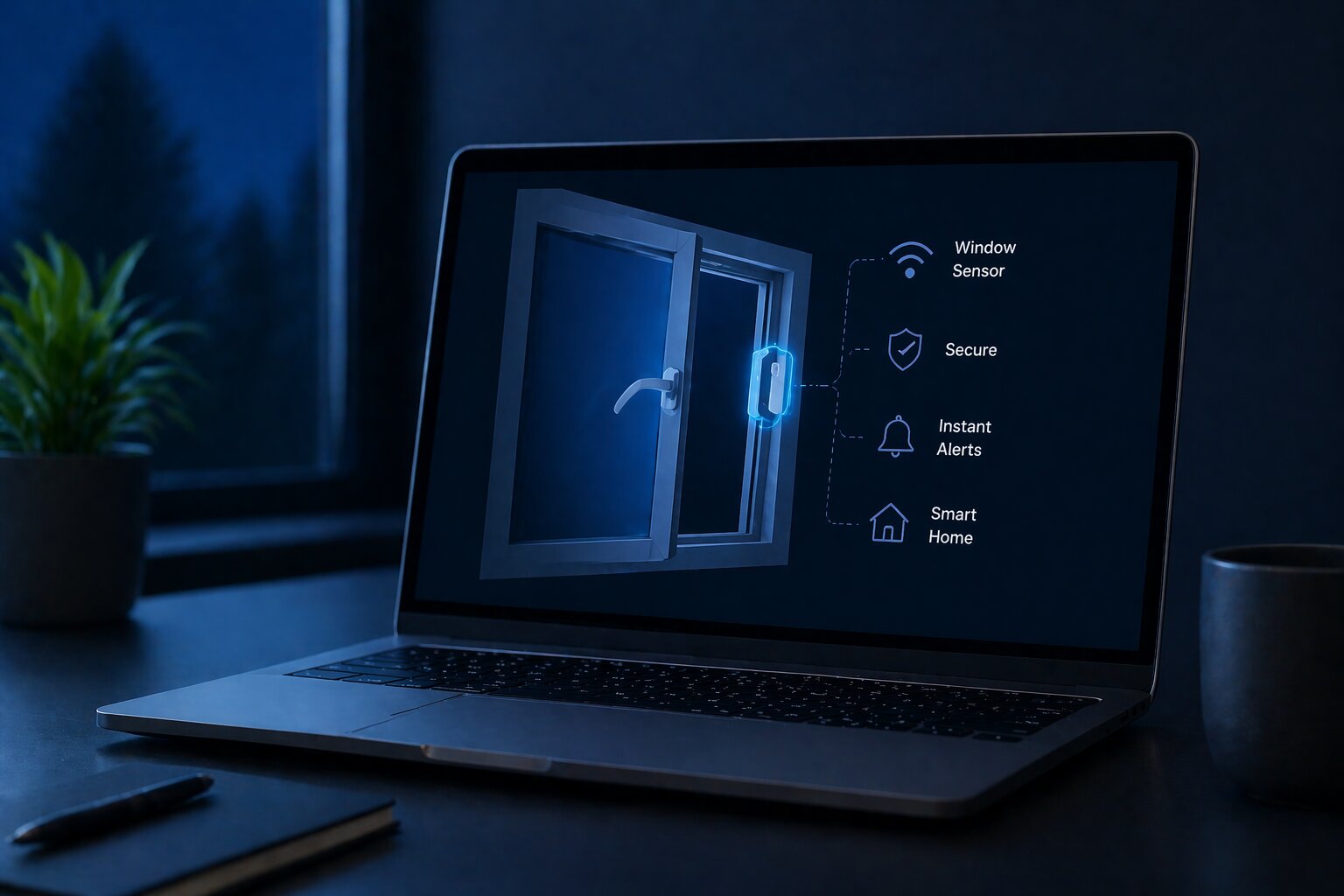
At a glance, a smart home window sensor appears to be a simple device. Typically small and unobtrusive, it is designed to detect whether a window is open or closed. However, behind that simplicity lies a combination of physical sensing technology, wireless communication, and software integration that enables these devices to become part of a wider intelligent system.
Understanding how smart window sensors work helps explain how modern homes are becoming more responsive, more secure, and more energy-efficient.
The basic principle behind window sensors
Most smart window sensors rely on a straightforward physical mechanism: the detection of separation between two components. A standard sensor typically consists of two parts. One is attached to the window frame, and the other is attached to the moving part of the window itself.
When the window is closed, the two components sit next to each other. When the window is opened, they separate. The sensor detects this change and registers it as a state change, typically switching from “closed” to “open.”
The most common method used to detect this change is a magnetic contact system. One part of the device contains a magnet, while the other contains a sensor that can detect the presence or absence of that magnetic field. When the magnet is close enough, the sensor registers a closed state. When the magnet moves away, the sensor detects the change and signals that the window has been opened.
This approach is reliable, low-cost, and energy-efficient, which is why it has been widely adopted across both traditional alarm systems and modern smart home platforms.
From simple detection to connected intelligence
While the physical detection mechanism is relatively simple, what makes a smart window sensor “smart” is its ability to communicate with other devices and systems. Instead of merely triggering a local alarm, modern sensors are connected to a broader network within the home.
Once a window is opened or closed, the sensor transmits that information wirelessly to a central hub, a smart home platform, or a cloud-based service. This communication may use technologies such as Wi-Fi, Zigbee, Z-Wave, or other low-power wireless protocols designed for connected devices.
This connectivity allows the sensor to become part of a larger ecosystem. Instead of acting in isolation, it can trigger actions, send alerts, and contribute to automated routines.
For example, if a window is opened while a security system is armed, the system can send a notification to a smartphone, activate an alarm, or alert a monitoring service. If the window is opened during normal operation, the system might simply log the event or adjust other devices in response.
Integration with home security systems
One of the primary uses of smart window sensors is in home security. These devices provide a simple but effective way to monitor potential entry points. Windows are often considered vulnerable areas in residential security, and sensors help ensure that any unexpected opening is detected immediately.
In a connected security system, window sensors are typically linked to a central control system. When the system is armed, any change in sensor state can trigger a predefined response. This might include sounding an alarm, sending alerts to the homeowner, or notifying a security provider.
Because these sensors are small and easy to install, they can be placed on multiple windows throughout a property. This creates a network of monitored points, giving the system a more complete view of the home’s status. It can help to create a secure environment for older people too, providing a great example of how smart homes can benefit the elderly.
Importantly, the value of these sensors is not only in detecting intrusion. They also provide awareness. Homeowners can check remotely whether windows are open or closed, which can be useful for security, weather protection, and peace of mind.
Role in home automation and energy efficiency
Beyond security, smart window sensors are increasingly used as part of home automation systems. By feeding real-time data into a smart home platform, they enable automated responses that improve comfort and efficiency.
For example, a smart heating or cooling system can adjust its behaviour based on whether windows are open. If a window is opened, the system may temporarily reduce heating or cooling to avoid wasting energy. When the window is closed again, normal operation can resume.
Similarly, smart blinds or ventilation systems can respond to window activity. Opening a window might trigger adjustments to airflow, lighting, or shading. In more advanced setups, sensors can work alongside temperature, humidity, and occupancy sensors to create a more responsive living environment.
This integration highlights how even simple devices can contribute to a broader intelligent system. A window sensor does not need to perform complex tasks on its own. Its value lies in the data it provides and how that data is used.
Types of smart window sensors
While magnetic contact sensors are the most common, there are other types of window sensors designed for specific use cases or enhanced functionality.
Some sensors include vibration detection, which can identify attempts to force a window open or break the glass. These sensors monitor subtle movements or impacts and can trigger alerts even if the window has not yet been fully opened.
Others incorporate glass-break detection, using acoustic sensors to recognise the sound frequency patterns associated with breaking glass. This adds an additional layer of protection, particularly for larger windows or sliding doors.
There are also multi-sensor devices that combine window detection with temperature, humidity, or light sensing. These can provide additional context for automation systems, allowing for more nuanced responses.
The choice of sensor type depends on the level of security required, the type of windows involved, and the broader goals of the smart home system.
Installation and practical considerations
One of the reasons window sensors are so widely used is that they are relatively easy to install. Most devices are designed for simple attachment using adhesive strips or screws, and they can be set up quickly through a companion app or central control system.
However, placement is important. The two components of the sensor must be aligned correctly so that the magnetic field is detected reliably when the window is closed. Poor alignment can lead to false readings or missed events.
Battery life is another consideration. Many sensors are battery-powered and designed to operate for long periods without replacement. Efficient communication protocols and low-power detection methods help extend battery life, but users still need to monitor and replace batteries as needed.
Connectivity also matters. The sensor must be within range of the hub or network it connects to. In larger homes or buildings, additional hubs or repeaters may be required to ensure reliable communication.
Privacy and data considerations
As with many smart home devices, window sensors raise questions about privacy and data usage. While these devices do not typically capture sensitive content like cameras or microphones, they still generate data about user behaviour.
Information about when windows are opened or closed can reveal patterns about occupancy, routines, and daily habits. If this data is stored or transmitted externally, it becomes part of a wider data ecosystem.
Manufacturers and platforms vary in how they handle this data. Some systems process information locally, while others rely on cloud services. Users should consider how their chosen system manages data, what controls are available, and how securely that information is stored.
Understanding these considerations is part of using smart home technology responsibly. Even relatively simple devices can contribute to a larger data picture.
The role of window sensors in connected living
Smart home window sensors illustrate a broader trend in technology: the move toward environments that are aware of their own state and capable of responding accordingly. A single sensor may provide only a small piece of information, but when combined with other devices and systems, it becomes part of a larger network of intelligence.
This network enables homes to move beyond static structures into dynamic systems that can adapt to user behaviour, environmental conditions, and security needs. The window sensor is one of many components that make this possible.
As smart home technology continues to evolve, these sensors are likely to become more integrated, more efficient, and more capable of working alongside other devices. They may incorporate additional sensing capabilities, improved connectivity, and deeper integration with automation platforms.
A simple device with a broader impact
At first glance, a smart window sensor is a small and relatively simple device. It detects whether a window is open or closed. Yet within a connected system, that information becomes meaningful. It can trigger alerts, influence automation, support energy efficiency, and contribute to overall home awareness.
The importance of these devices lies not in their complexity, but in their role within a larger system. They demonstrate how modern technology often works not through isolated innovation, but through the combination of simple components into a cohesive, responsive environment.
In that sense, smart window sensors are a useful example of how connected technology is shaping everyday life. They show that even the smallest devices can play a meaningful role in the way homes are monitored, managed, and experienced.