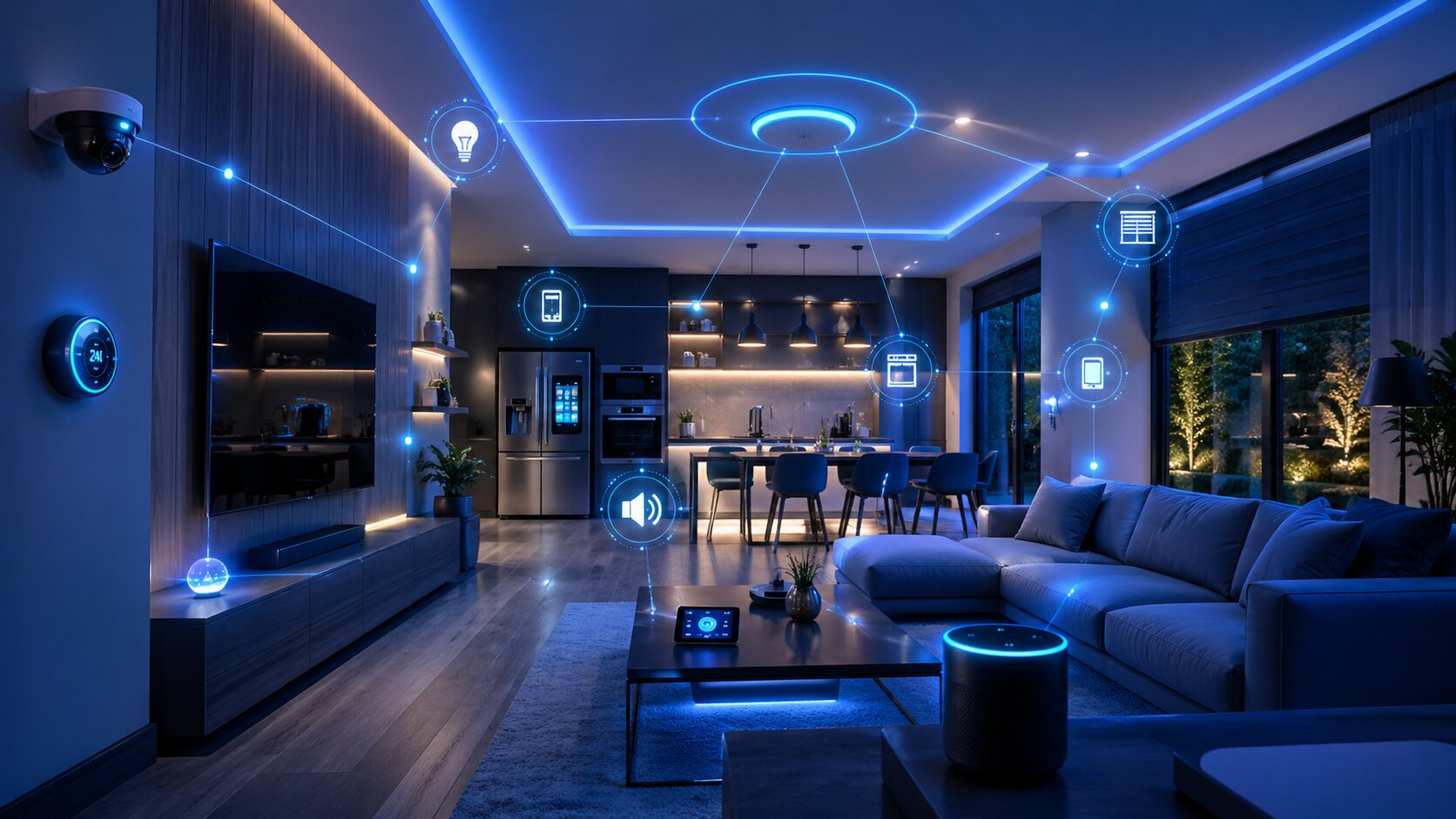
Total Home Automation: Can You Achieve It?
The idea of total home automation has moved steadily from science fiction into everyday consumer technology. What once sounded futuristic—lights adjusting automatically, heating systems responding to occupancy, doors locking themselves, voice assistants controlling household routines, and devices coordinating behind the scenes—is now increasingly possible through connected systems and smart home platforms. For many homeowners, the appeal is obvious: more convenience, better energy efficiency, stronger security, and a home that feels more responsive to daily life.
Yet the concept of total home automation is also easy to overstate. It suggests a fully integrated environment in which every major function of the home is coordinated automatically, intelligently, and reliably. In practice, reaching that level of integration is more complicated than simply buying a few connected devices. It involves compatibility, infrastructure, software ecosystems, user priorities, budget, and the ongoing challenge of getting different systems to work together smoothly.
So, can you really achieve total home automation? The answer is partly yes—but with important limits. Modern technology can automate a remarkable amount of home activity, but “total” automation is less a fixed endpoint than a spectrum. What matters most is not whether every single system can be connected in theory, but whether the connected home works meaningfully, reliably, and usefully for the people living in it.
What total home automation actually means
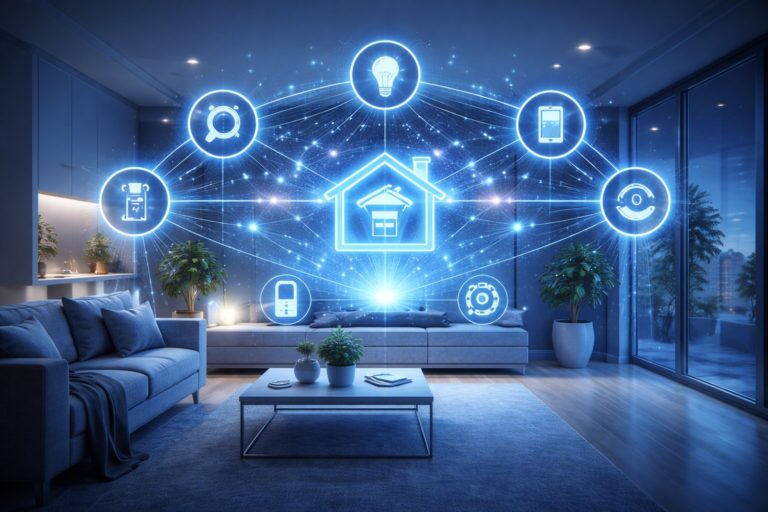
To understand whether it can be achieved, it helps to define what total home automation would involve. At the broadest level, it means a home in which multiple systems are connected and capable of responding automatically to time, occupancy, environmental conditions, user preferences, and one another.
This could include lighting, heating, cooling, blinds, appliances, entertainment systems, security cameras, alarms, locks, doorbells, sensors, air quality monitors, irrigation systems, and energy management tools. In a highly automated setup, these devices do not simply operate individually. They interact as part of a wider system.
For example, leaving the house might trigger a routine that locks doors, arms the alarm, switches off unnecessary lights, lowers the thermostat, closes blinds, and pauses certain appliances. Returning home could trigger the opposite pattern, adjusting lighting and temperature based on time of day and occupancy.
This vision of total home automation is attractive because it suggests the home can become adaptive rather than static. But achieving that vision depends on more than device ownership. It depends on orchestration.
The difference between smart devices and a smart home
One of the biggest misconceptions in this area is the assumption that owning multiple smart devices automatically creates a smart home. In reality, there is a major difference between connected gadgets and a genuinely integrated environment.
A smart speaker, connected bulb, smart thermostat, and video doorbell may all be useful on their own. But if they cannot coordinate well, require separate apps, rely on inconsistent automation logic, or fall into different ecosystems with limited interoperability, the home may end up feeling fragmented rather than intelligent.
Total home automation depends less on the number of devices and more on how well they communicate and respond as a system. This is why platform choice matters so much. The homeowner is not just buying hardware. They are also choosing the digital environment through which those devices will be managed.
That distinction is important because many frustrations with smart homes come not from the technology failing individually, but from the home never becoming more than a collection of isolated tools.
The role of ecosystems and compatibility
A major factor in whether total home automation is realistic is ecosystem compatibility. Most connected home devices rely on software platforms or voice assistant ecosystems such as Google Home, Amazon Alexa, Apple Home, or manufacturer-specific systems. These ecosystems act as the coordination layer that enables routines, control, and interaction between products.
The challenge is that compatibility is not always complete. Some devices support basic integration but not deeper automation. Others work best only within their own ecosystem. A smart camera may appear in one platform while offering more detailed features only in its manufacturer app. A smart lock may support status reporting but limit certain voice-based commands for security reasons. A connected appliance may integrate only partly with broader home routines.
Because of this, achieving something close to total home automation often requires careful planning before buying devices. Homeowners need to think in terms of long-term system design rather than one-off purchases. If the ecosystem is too fragmented, automation becomes harder to manage and the promise of total control becomes less realistic.
In practical terms, the home is only as automated as its least cooperative layer.
Where home automation works best today
Despite these limitations, there are areas where automation is already highly achievable and often very effective. Lighting is one of the strongest examples. Smart lighting systems can respond to schedules, occupancy, ambient light levels, and user routines with relatively little friction. For many households, this is one of the easiest ways to experience meaningful automation.
Heating and cooling are another strong category. Smart thermostats and connected climate systems can adjust temperatures based on time of day, presence, weather conditions, and learned usage patterns. This not only improves convenience but can also contribute to energy efficiency.
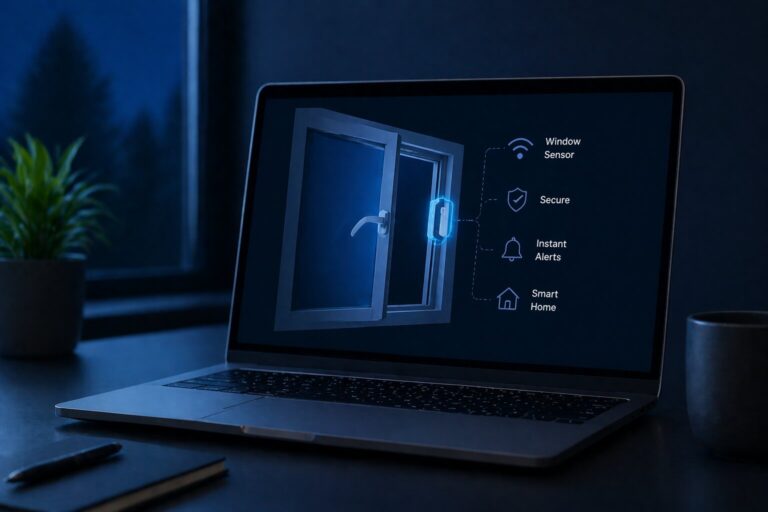
Security is also well suited to automation. Door and window sensors, smart locks, cameras, motion detectors, and alarms can already work together in ways that provide better awareness and control. Routines such as arming a system at night, turning on exterior lights when motion is detected, or locking doors automatically at a certain hour are widely achievable.
Blinds, plugs, and certain appliances also fit naturally into automation setups, especially where the actions are predictable and repetitive. These categories show that total home automation is not a fantasy in every respect. Significant parts of it are already working well in many homes.
The harder parts of full automation
Where things become more complicated is in areas involving legacy infrastructure, complex appliances, or behavioural unpredictability. Not every device in a home was designed to be connected, and retrofitting automation onto older systems can be expensive or technically awkward.
Large appliances may support limited smart functions but still operate largely as standalone units. Plumbing systems, older heating infrastructure, or analogue equipment may need adapters, specialist installation, or complete replacement before they can become part of a connected setup. Even then, the results may be less seamless than expected.
User behaviour also creates challenges. A truly automated home must respond appropriately to changing routines, guests, unusual schedules, and preferences that are not always consistent. What feels intelligent one day may feel intrusive the next. Lights that switch off too aggressively, heating schedules that fail to adapt, or voice assistants that respond at the wrong time can make automation feel brittle rather than helpful.
This highlights an important truth: total home automation is not only a technical challenge. It is also a design challenge shaped by how people actually live.
Automation versus control
Another important issue is the balance between automation and control. A connected home should ideally make life easier, but if it becomes too complex to manage, it can create new frustrations. This is one reason why some smart home users eventually reduce the number of automations they use. A system that requires constant troubleshooting, reconfiguration, or explanation may not feel worth the effort.
For home automation to work well, the homeowner needs confidence that routines will behave predictably and that manual control remains available when needed. Total automation should not mean surrendering all agency to the system. It should mean reducing unnecessary manual effort while keeping the user firmly in charge.
This balance is essential because homes are highly personal environments. Unlike enterprise systems, they are not built only for efficiency. They must also feel comfortable, flexible, and appropriate to family life, different preferences, and changing routines.
The best automation often feels almost invisible. It works quietly in the background, reducing friction without demanding attention. That is a better goal than trying to automate every possible task simply because technology allows it.
The importance of sensors and context
If there is one category that pushes a home closer to meaningful total automation, it is sensing. Smart homes become more useful when they can respond not just to time schedules or voice commands, but to real conditions. Motion sensors, temperature sensors, humidity sensors, door and window sensors, light sensors, leak detectors, and presence detection tools all add contextual awareness.
This matters because context makes automation more adaptive. A heating system can respond differently if a room is occupied. Lights can adjust based on both movement and natural light. Ventilation can react to humidity or air quality. Security systems can distinguish between a scheduled disarming routine and an unexpected opening of a door at night.
Without sensors, automation tends to rely on fixed logic. With sensors, the home becomes more responsive. That does not necessarily make it fully intelligent in the human sense, but it makes it more aware of real conditions and better able to behave appropriately.
In many ways, sensors are what turn connected devices into a more coherent home system.
Voice assistants and the illusion of totality
Voice assistants have played a major role in popularising home automation because they make control feel immediate and centralised. Speaking a command to dim lights, play music, adjust the temperature, or check whether doors are locked creates a powerful impression that the home is fully connected and under unified control.
However, voice control can also create the illusion of totality where deeper integration is still incomplete. A system may respond to selected commands while still depending on multiple apps, separate routines, and partially compatible products behind the scenes. That does not make voice assistants unhelpful—they remain a key part of many smart homes—but it does mean that convenient control is not the same as fully unified automation.
The strongest home automation setups tend to combine voice control with app-based management, sensor-driven automation, and sensible manual override. Voice is useful, but it is only one layer in the wider structure.
This distinction matters because total home automation should be judged by how the system behaves as a whole, not only by how easy it is to trigger isolated actions by voice.
Cost, complexity, and diminishing returns
Another reason total home automation is difficult to achieve in full is that cost and complexity tend to increase as coverage expands. Automating the most obvious parts of the home—lights, heating, selected security features—can deliver clear benefits fairly quickly. But each additional layer often becomes harder and more expensive to integrate.
At a certain point, the return on complexity may diminish. A household may spend a great deal of time and money trying to connect low-priority devices or edge-case routines that add little real benefit. The idea of total automation can become a kind of technical perfectionism rather than a practical goal.
This does not mean ambition is misplaced. It means the best smart homes are usually designed around meaningful use cases rather than total device count. Automate what improves daily life, strengthens security, or reduces waste. Be more selective about the rest.
In practice, a home that automates 60 or 70 percent of relevant daily behaviours smoothly may be far more satisfying than one attempting 100 percent but constantly needing adjustment.
Internet Connectivity
When you read about home automation, there is often an assumption that you have great internet connectivity. Sadly, in some areas, this may not be the case.
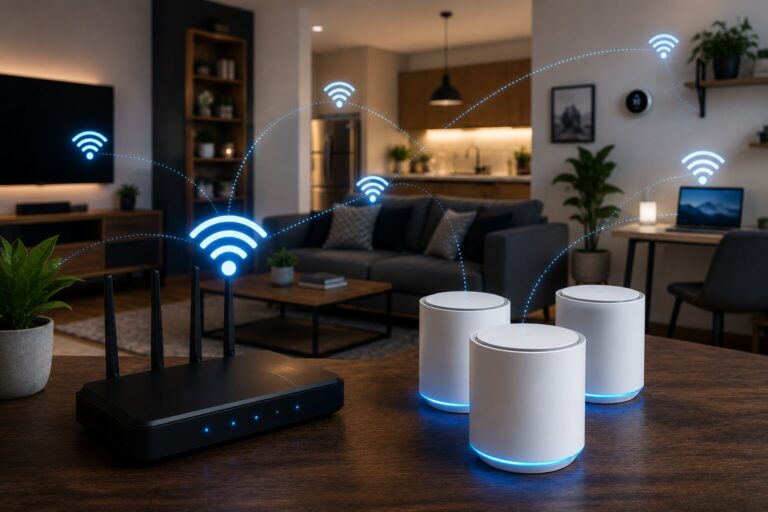
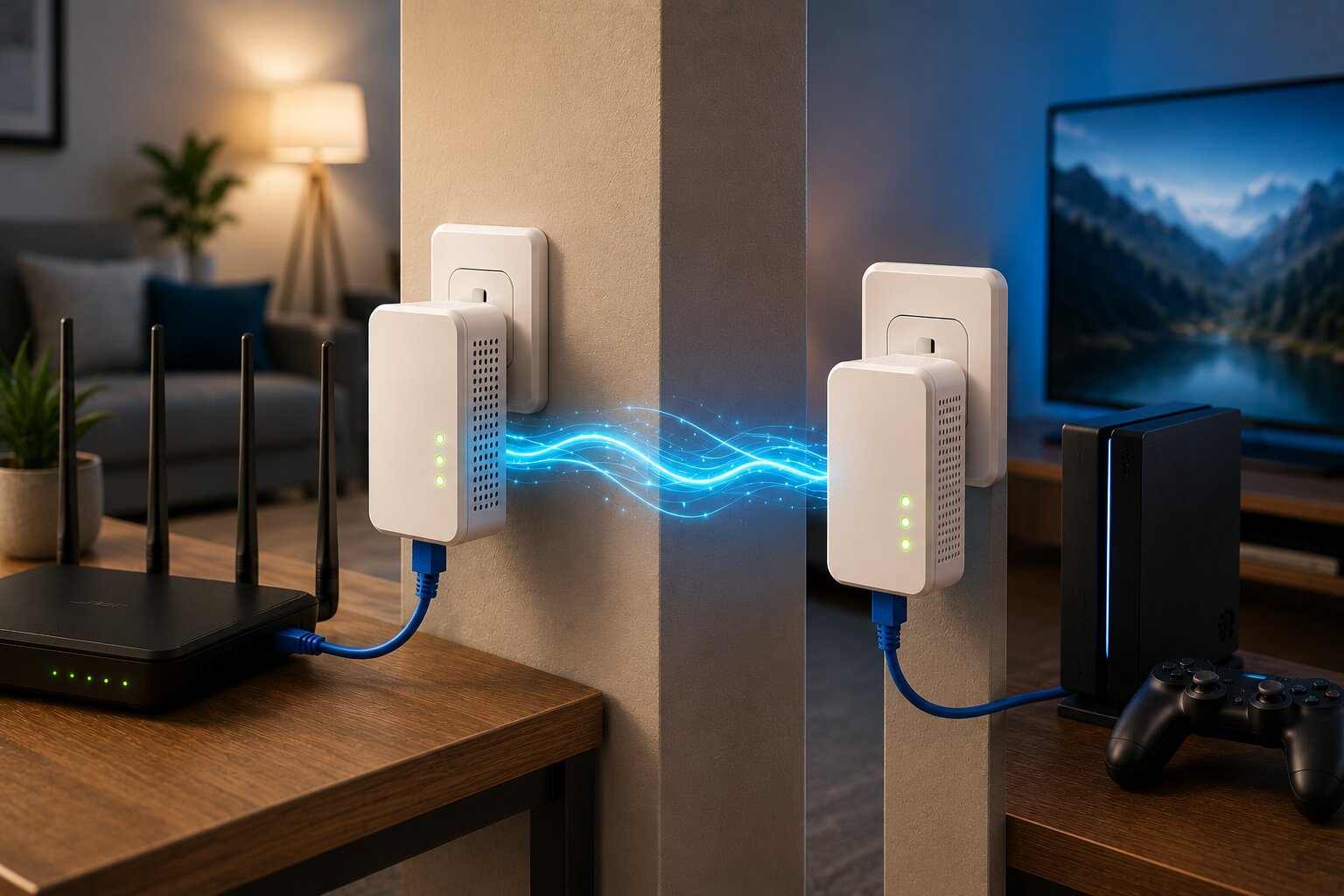
If you want to embrace full home automation, then you’ll need to improve your home Wifi setup to allow for it. If that’s not going to work for you, then you could consider the option of using Powerline adapters, which are a good alternative for many. Either way, you’ll need a reliable solution in place.
Can AI make full home automation more realistic?
Artificial intelligence is increasingly being positioned as the next step in home automation, with the promise that systems will not only follow routines but also learn behaviours, anticipate needs, and adapt more intelligently over time. In theory, this could move homes closer to a more truly automated state.
For example, AI-enhanced systems may learn preferred temperatures, identify occupancy patterns, predict when lighting changes are needed, or reduce the amount of manual rule-setting required. Instead of programming every routine in advance, users may rely more on systems that infer likely intentions from past behaviour and real-time context.
However, this vision also introduces new concerns. More intelligence often means more data collection, more opaque decision-making, and greater dependence on cloud services or platform providers. It also raises the risk of incorrect inference. A system that “learns” the wrong pattern may create confusion rather than convenience.
AI may make total home automation more realistic in some respects, but it is unlikely to remove the need for careful design, interoperability, and user control. A smarter home is not automatically a better one unless the intelligence genuinely improves lived experience.
So, can total home automation really be achieved?
The most honest answer is that it can be achieved partially, extensively, and impressively—but rarely in an absolute sense. Modern smart home technology can automate a large proportion of routine household activity if devices are chosen carefully, ecosystems are planned well, and expectations remain realistic. Lighting, climate, security, energy management, and selected appliances can already be integrated in ways that were impossible for ordinary households just a few years ago.
But “total” automation is still constrained by ecosystem fragmentation, device compatibility, legacy infrastructure, user variability, and the fact that homes are complex human environments rather than purely technical systems. A fully seamless, universally integrated smart home remains more of an ideal than a consistent reality.
That does not make the goal meaningless. It simply means that success should be measured less by totality and more by usefulness. A highly automated home that genuinely improves comfort, safety, and efficiency is already a substantial achievement.
A better way to think about the automated home
Total home automation is best understood not as an all-or-nothing outcome, but as a process of integration. The smartest homes are not necessarily the ones with the most connected devices. They are the ones where technology works together in a way that feels coherent, reliable, and worthwhile.
In that sense, yes, you can achieve something very close to total home automation—but only if you define success carefully. The goal is not to automate every single action for its own sake. It is to build a home environment where technology reduces friction, adapts intelligently, and supports daily life without becoming a burden in its own right.
That is a more practical and more valuable vision of automation than the fantasy of a perfectly self-managing house. And for most people, it is also much more achievable.